Project overview
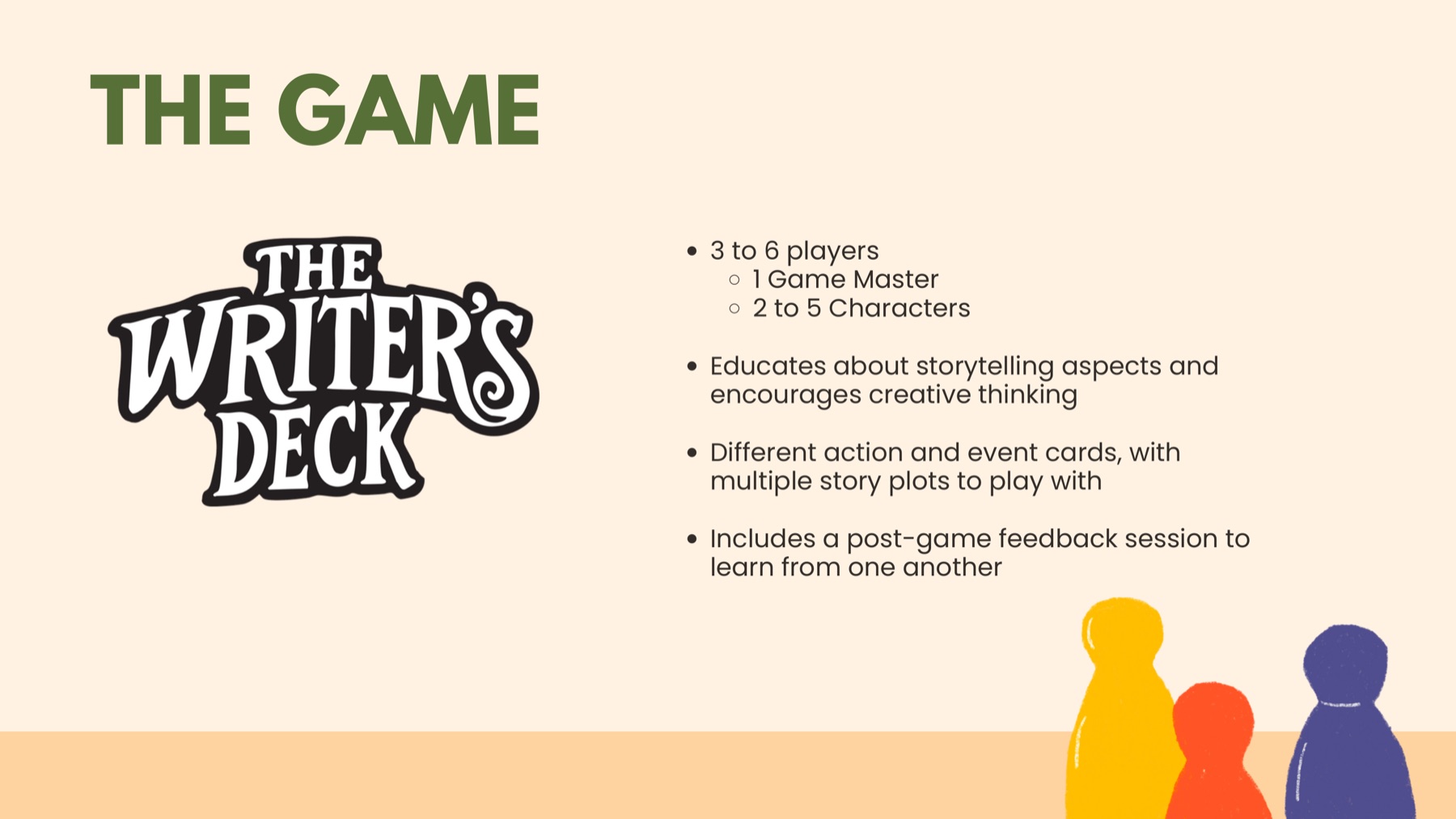
The Writer’s Deck is a multiplayer card game designed for undergraduate students who aspire to make films but struggle to apply storytelling theory in practice.
Instead of presenting another passive tutorial, the concept helps players practise narrative construction through roles, events, actions, changing story conditions and peer feedback.
- Format
- Physical multiplayer card game
- Players
- 3–6
- Structure
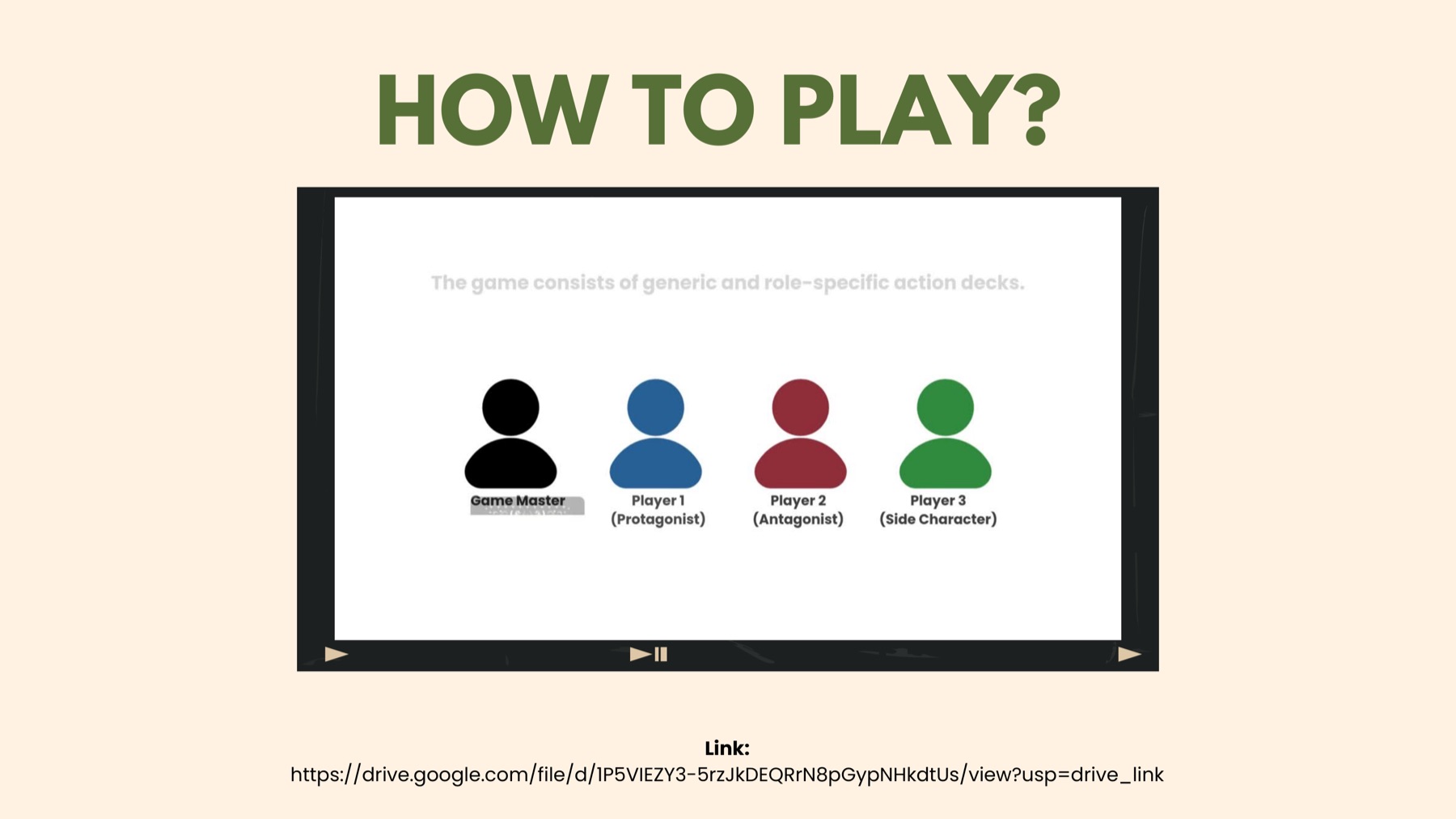
- One Game Master and two to five character players
- Focus
- Story structure, character development, pacing and creative thinking
- Methods
- Interviews, persona, journey mapping, ideation, prototyping and gameplay testing
This was a five-person collaborative university project. My contribution was product research and design; the concept, prototypes and testing were developed with the team.
Storytelling resources were abundant, but practical application remained difficult
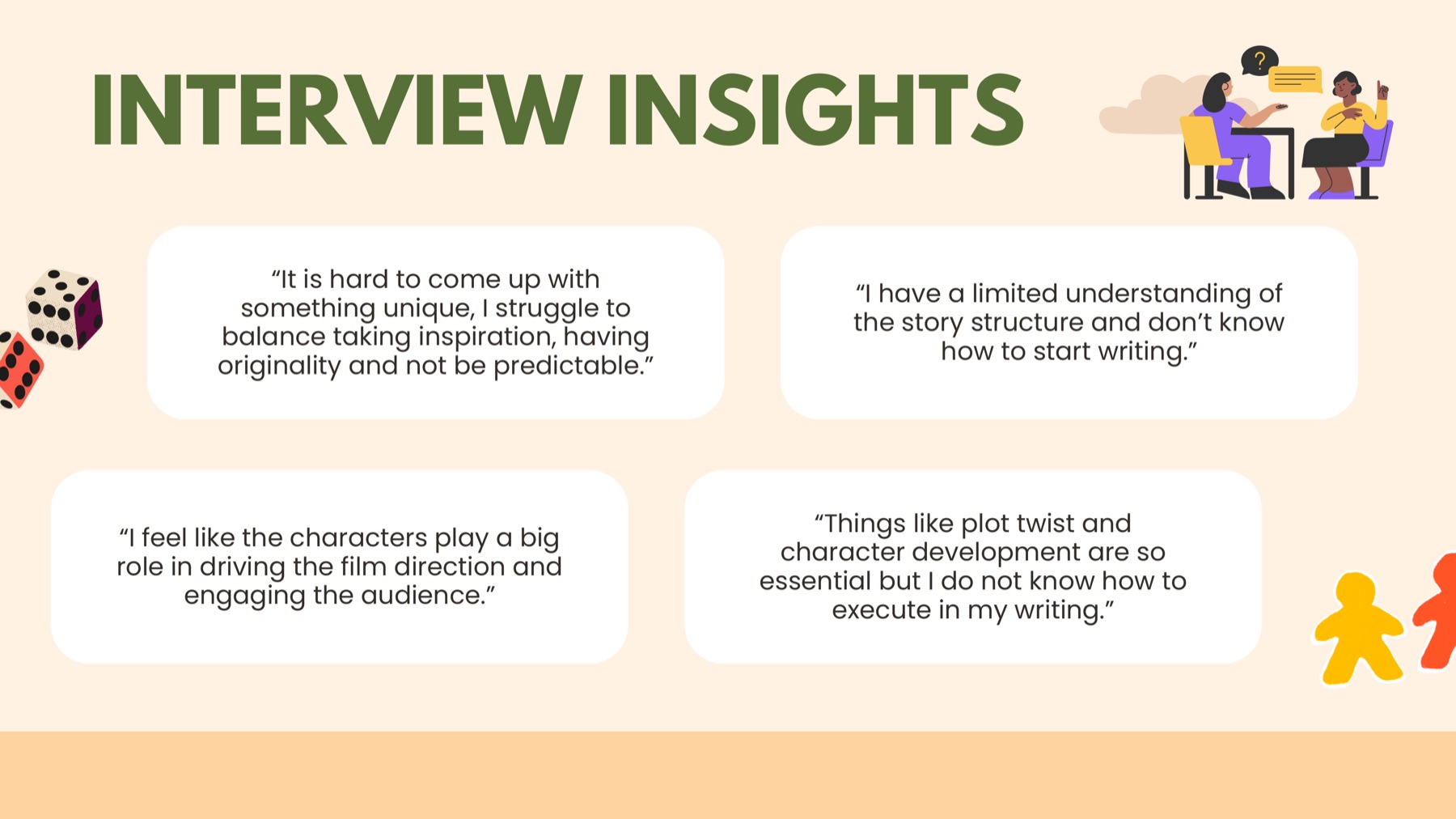
Aspiring filmmakers could find large amounts of advice online, yet some still felt overwhelmed and unsure how to begin. Interviews indicated difficulty balancing originality with relatability, understanding story structure, creating meaningful character development and executing plot twists without becoming predictable.
Themes drawn from the interviews
- Difficulty starting a story
- Uncertainty around structure
- Fear of relying on clichés
- Limited confidence in character development
- Difficulty translating theory into a finished narrative
These are paraphrased themes synthesised from the project’s interviews, not direct quotations.
Target user
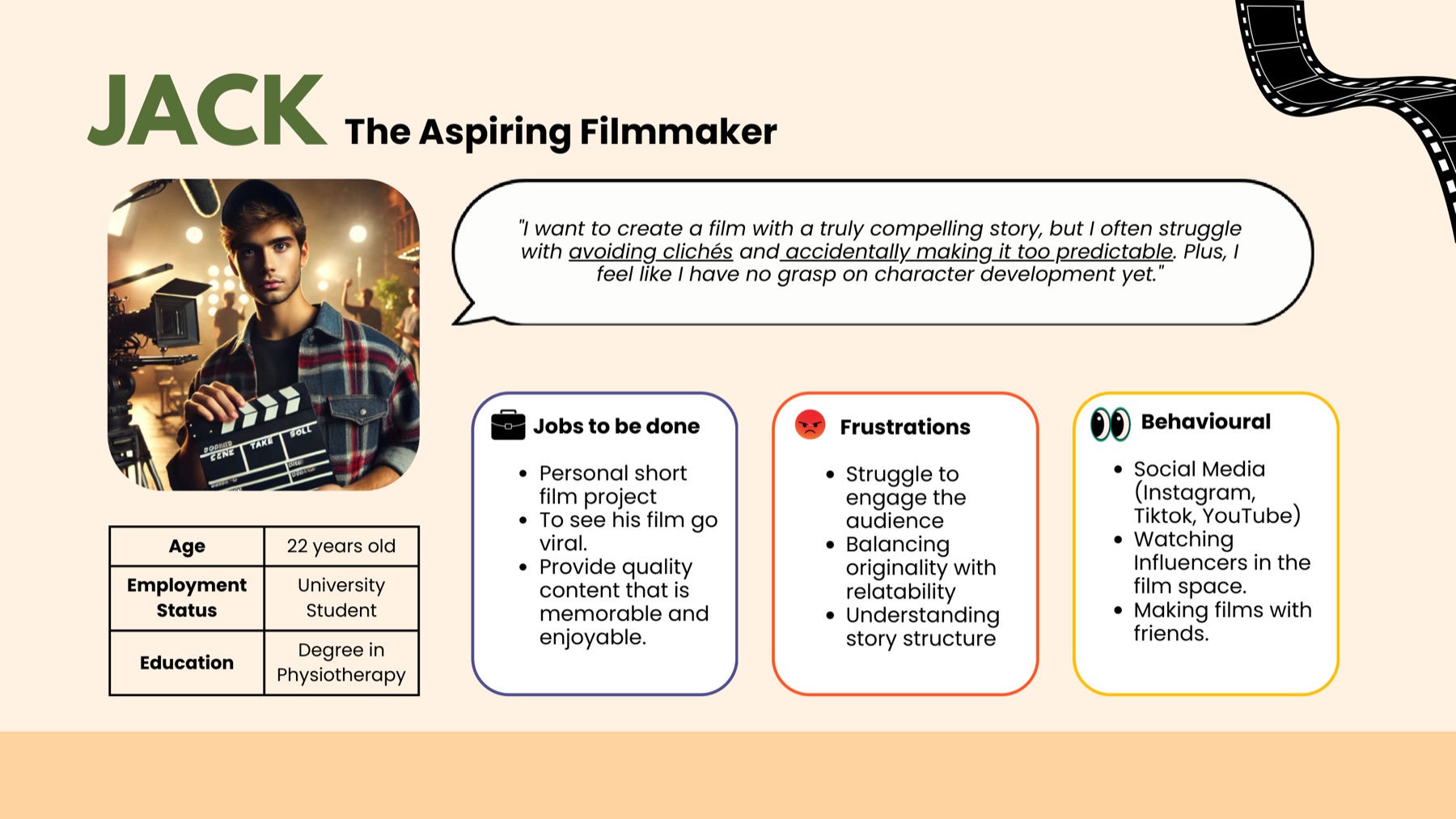
Jack is a 22-year-old university student and aspiring filmmaker. He creates films with friends and learns through social media, online creators and existing films. His goal is to produce memorable stories, but he struggles with structure, engagement, originality and character development.
Jack needs a hands-on and structured way to practise scriptwriting because passive online resources do not help him confidently translate theory into action.
Opportunity
How might we gamify complex storytelling techniques so an aspiring filmmaker can practise scriptwriting knowledge through active creation?
Concept development
The team selected a multiplayer storytelling game in which the group builds a narrative together while one player steers it.
- One player acts as the Game Master
- Other participants play story characters
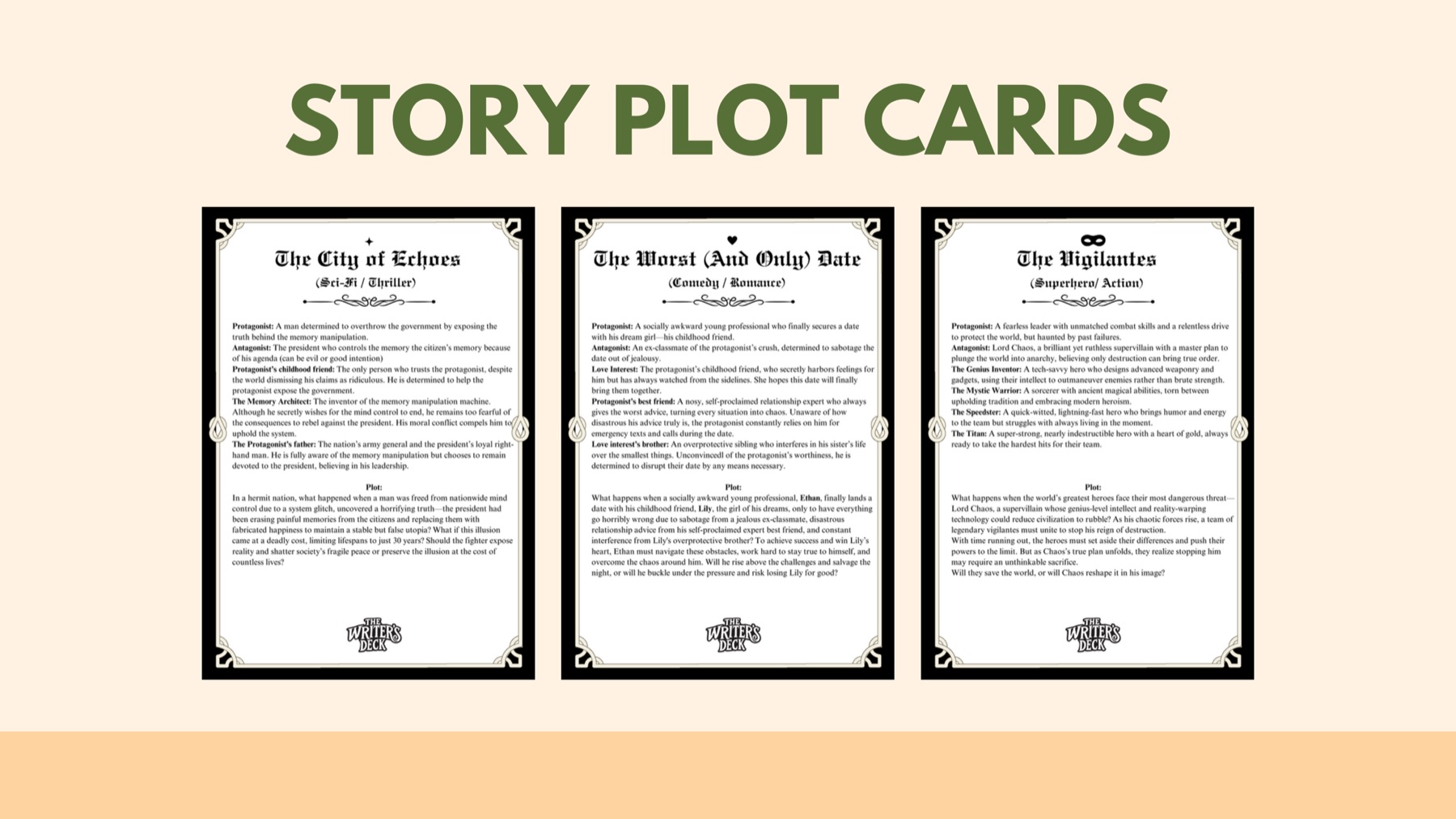
- Story Plot cards establish narrative conditions
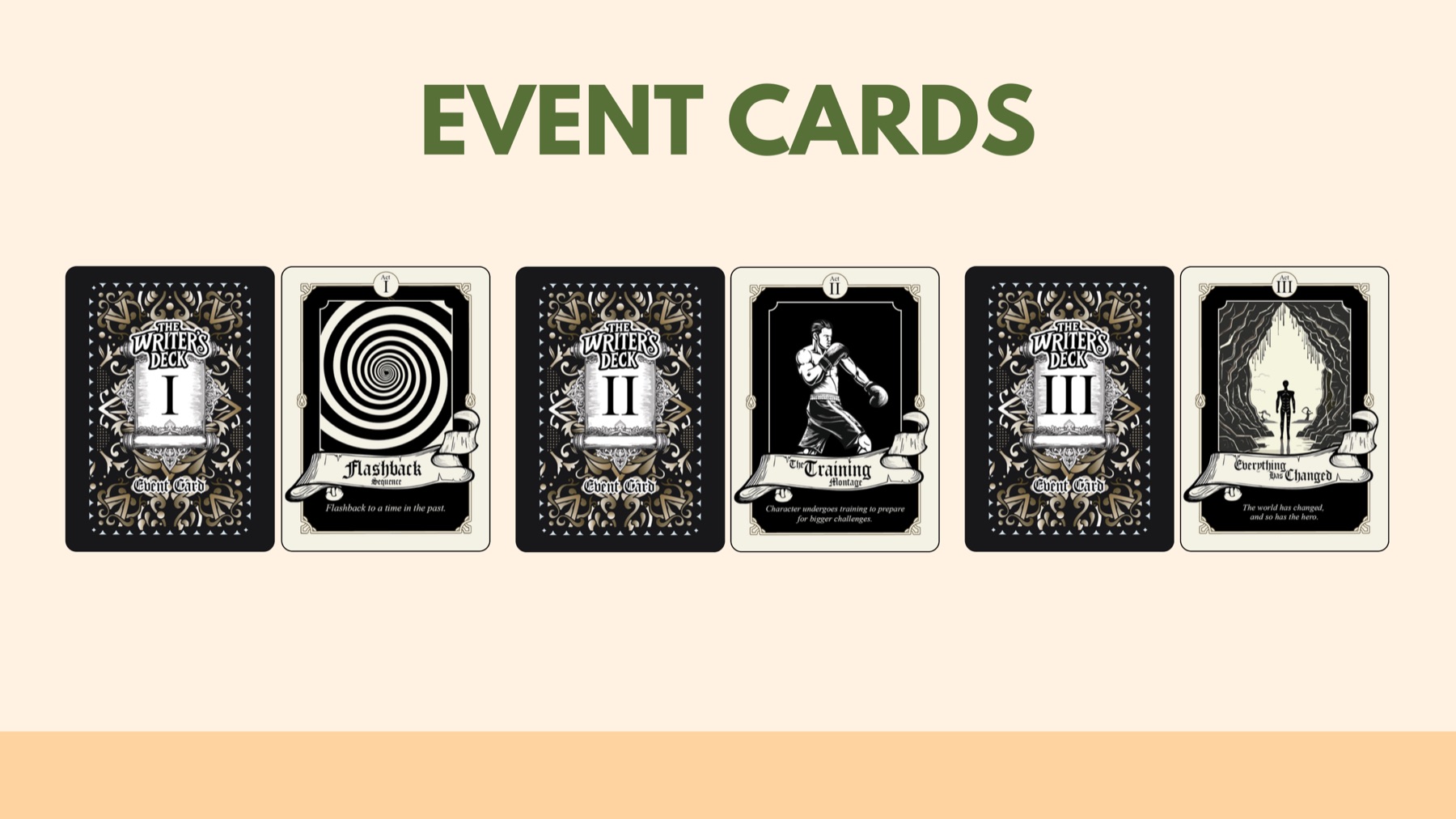
- Event cards introduce change and conflict
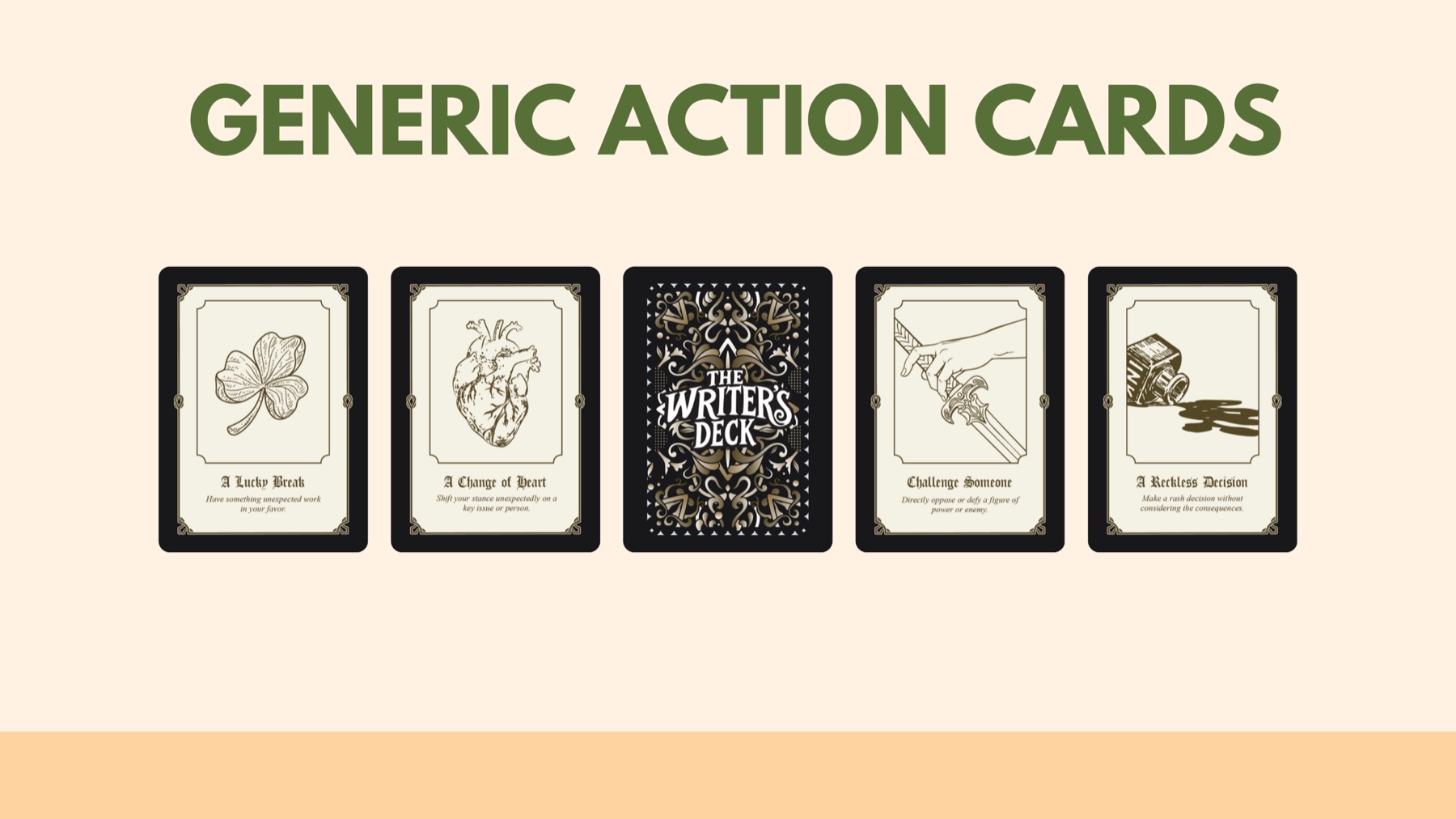
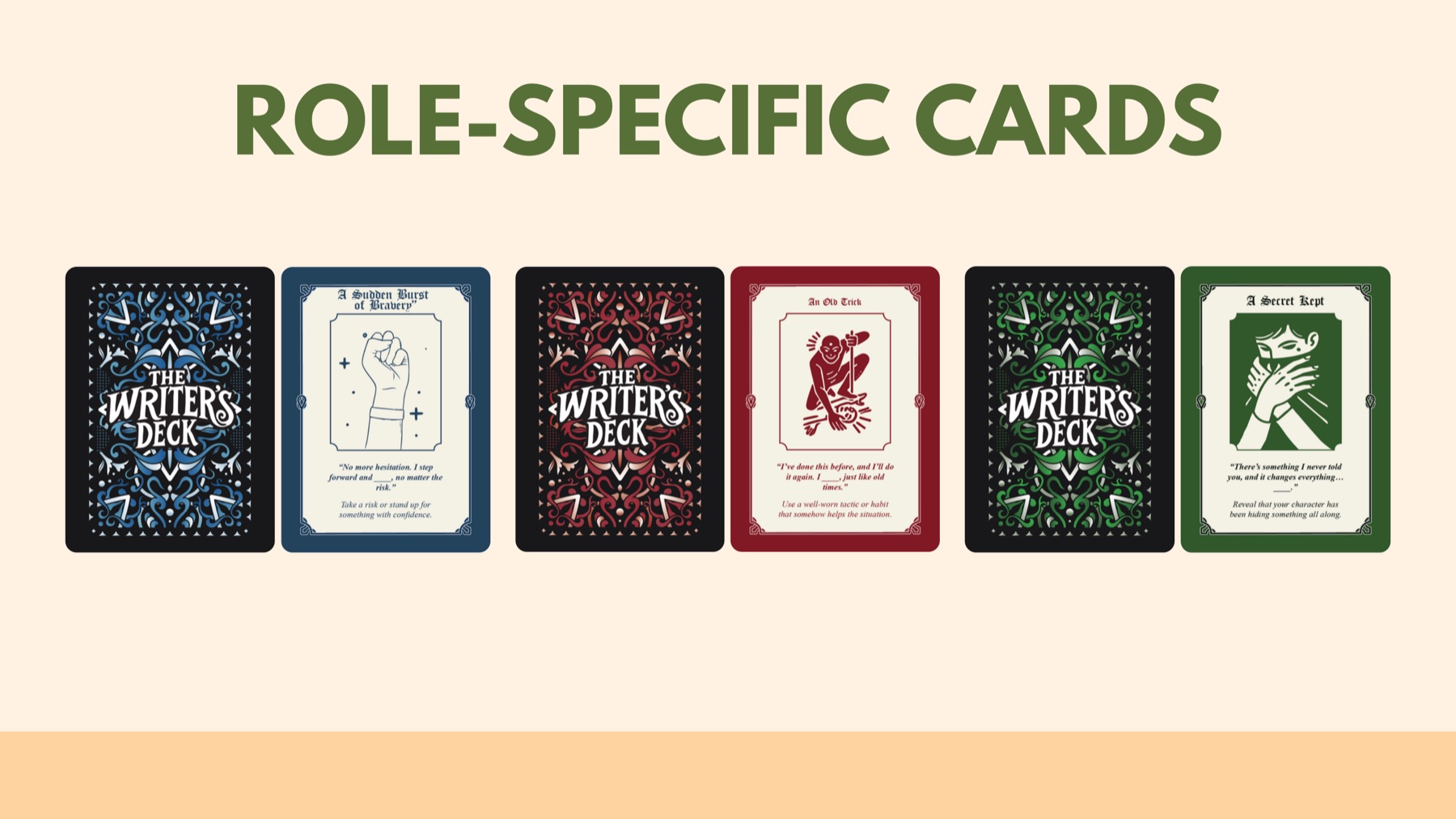
- Generic and role-specific Action cards shape player decisions
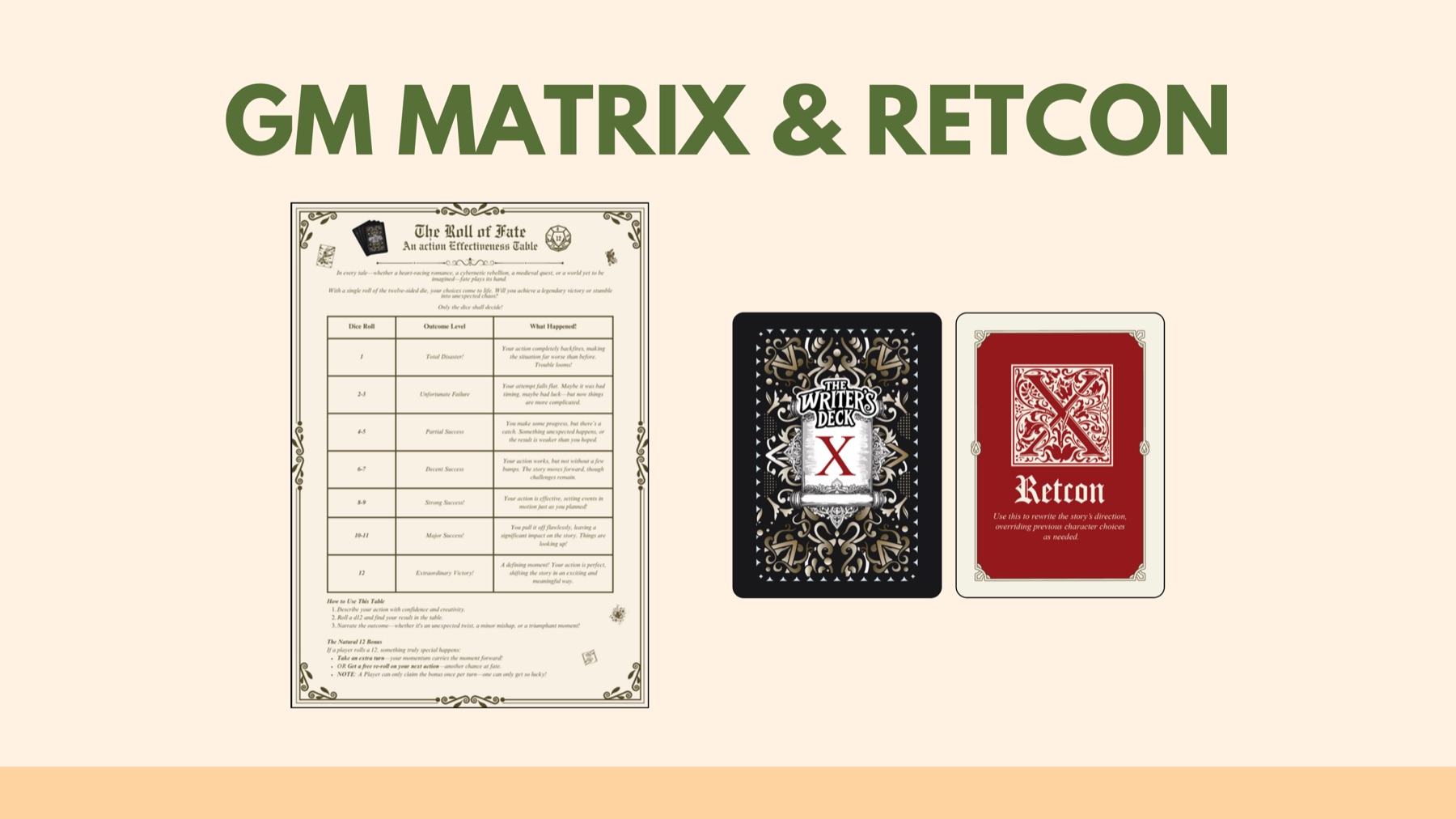
- Retcon cards allow the Game Master to regain narrative control
- Dice and player choices create unpredictability
- A post-game discussion provides constructive feedback
Process and iterations
Prototype I
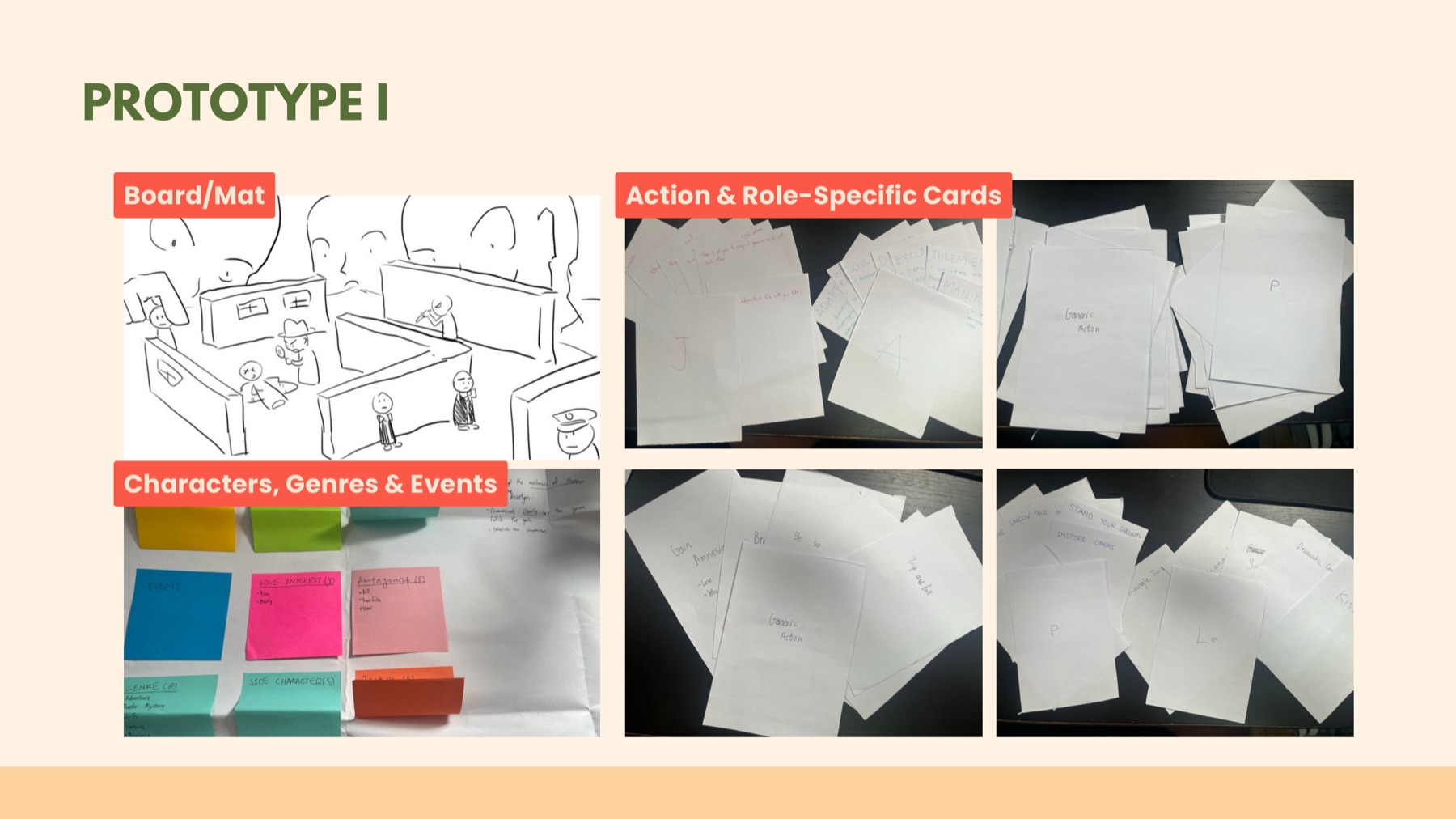
The first prototype was the initial attempt to turn narrative-building into a structured multiplayer experience, and it existed to be played rather than to be admired — the point was to find out where the mechanics broke down.
Prototype II
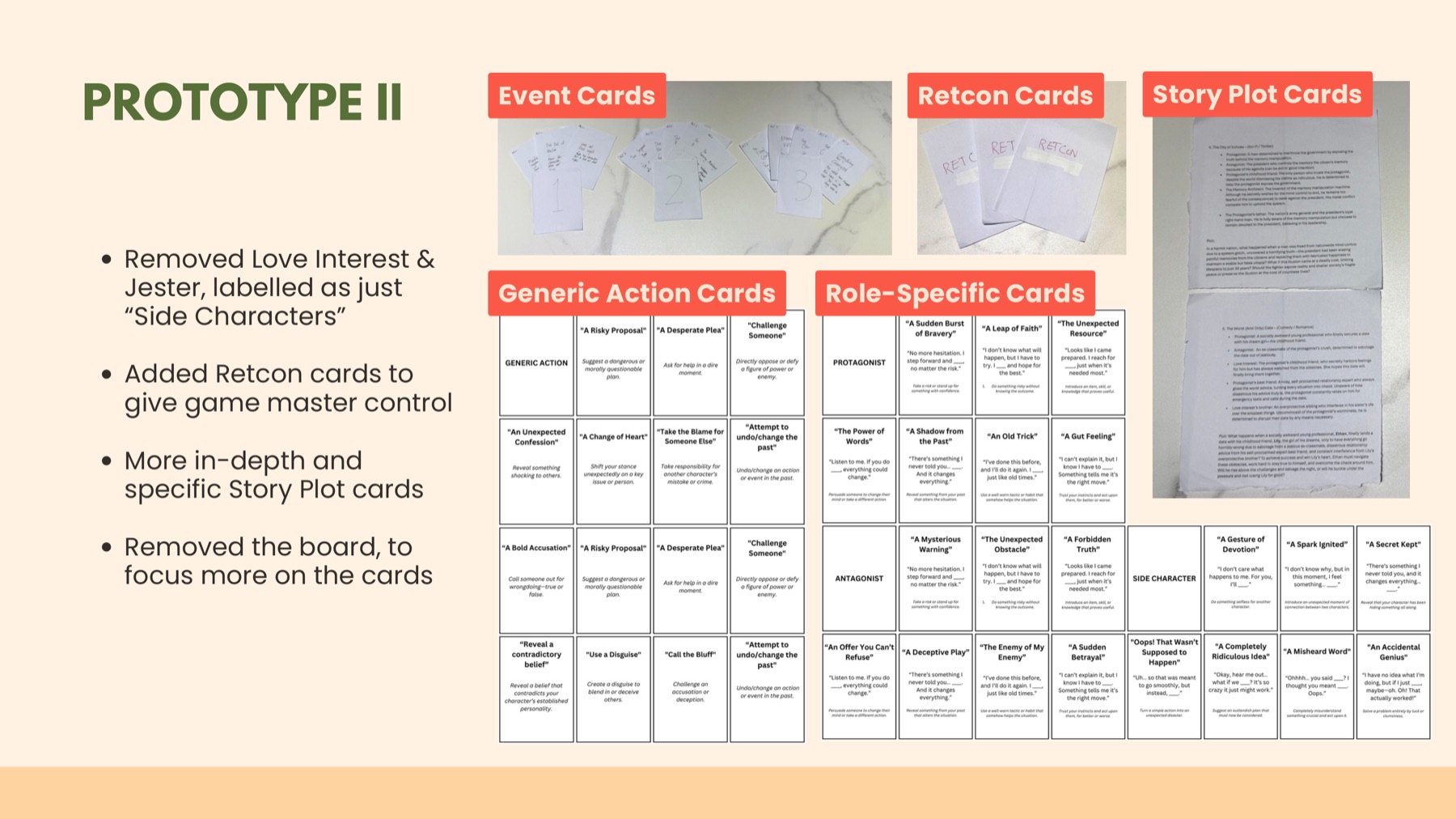
The second prototype responded to what the first one exposed:
- Combined Love Interest and Jester into the broader “Side Characters” category
- Added Retcon cards to give the Game Master more control
- Made Story Plot cards more specific
- Removed the board to focus attention on the cards
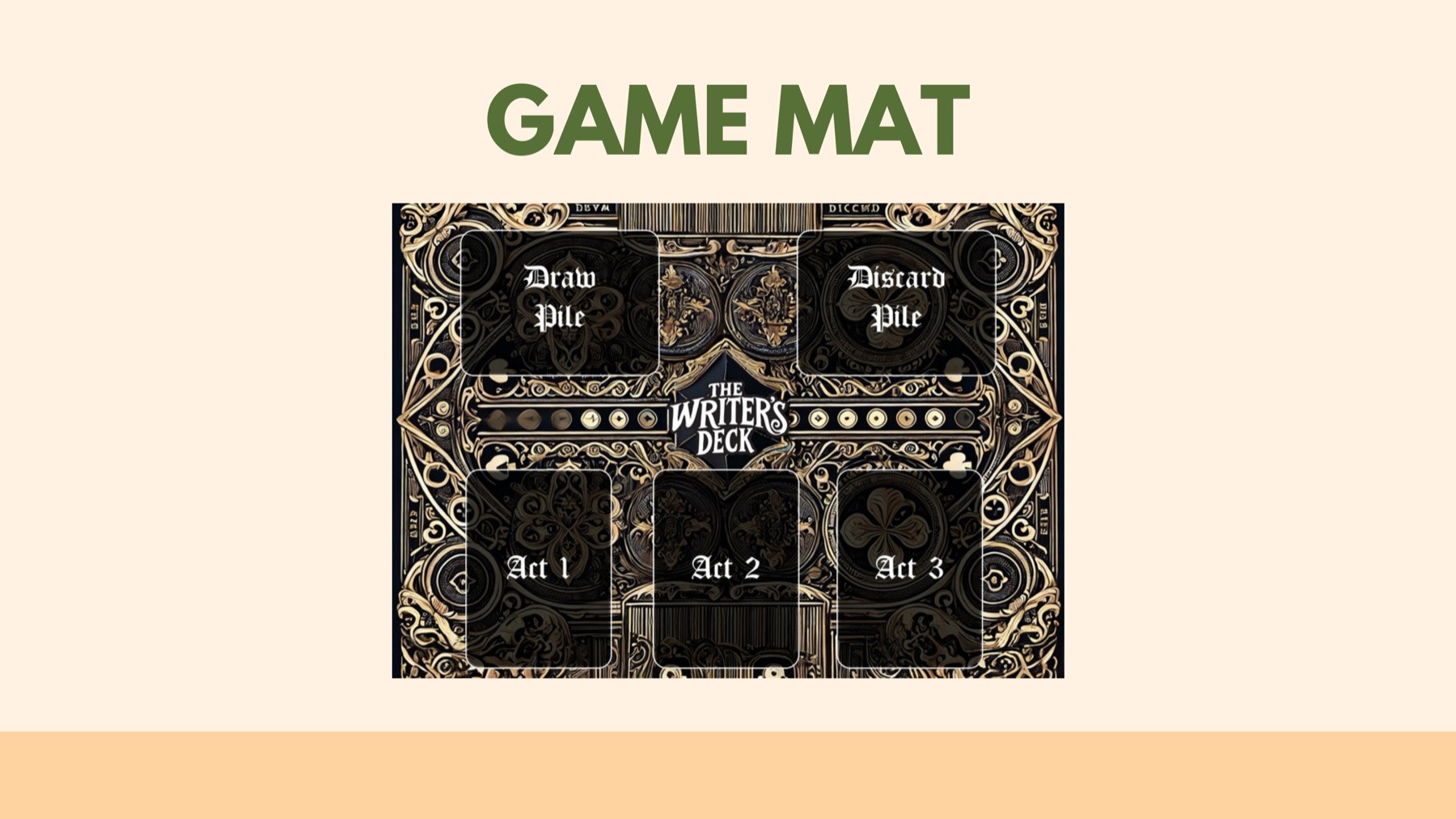
- Organised the system around Event, Retcon, Story Plot, generic Action and role-specific cards
User testing
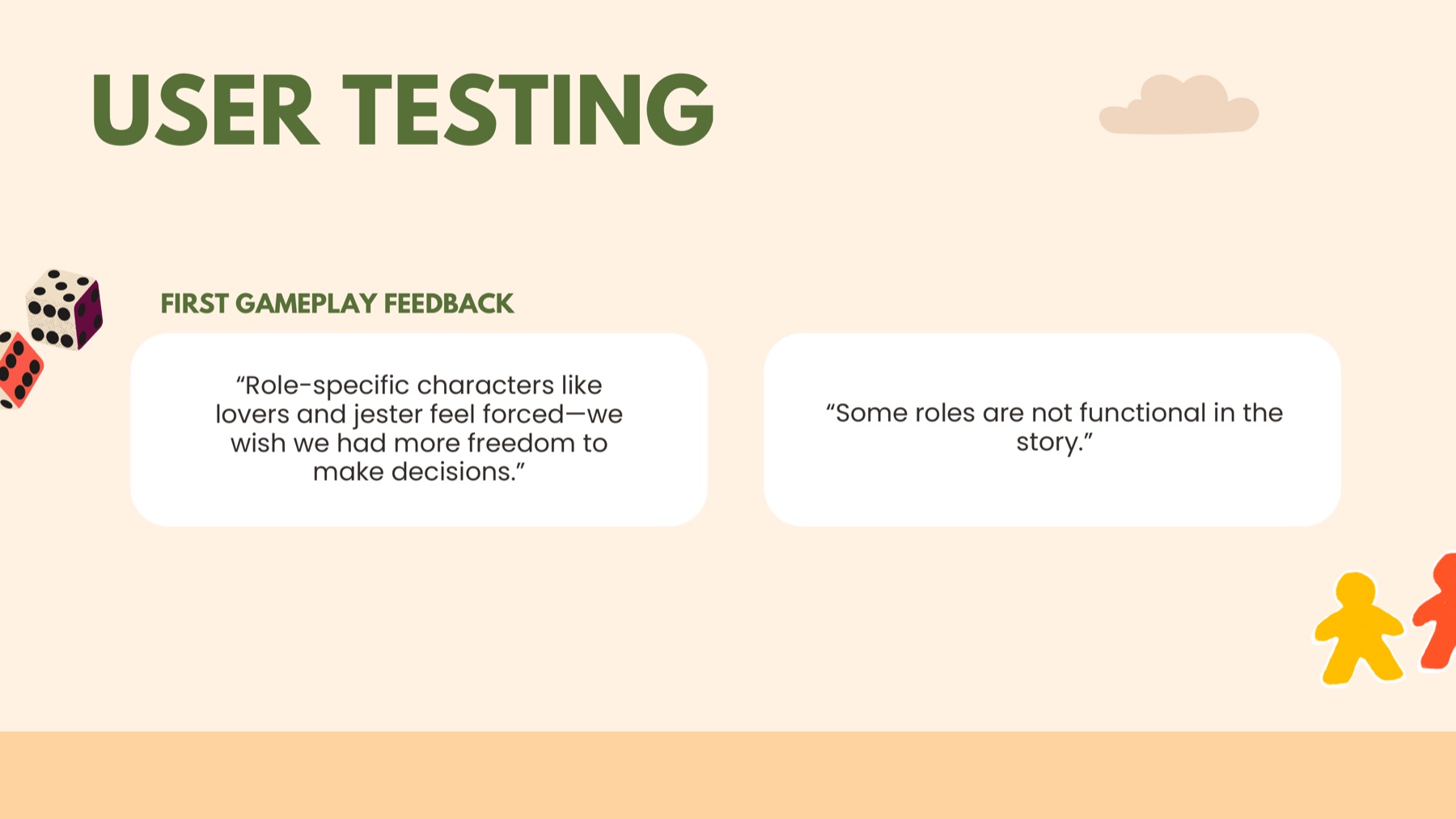
Repeated gameplay sessions were used to identify unclear rules, pacing problems and interactions that reduced player agency. Watching people play surfaced problems that reading the rules never would.
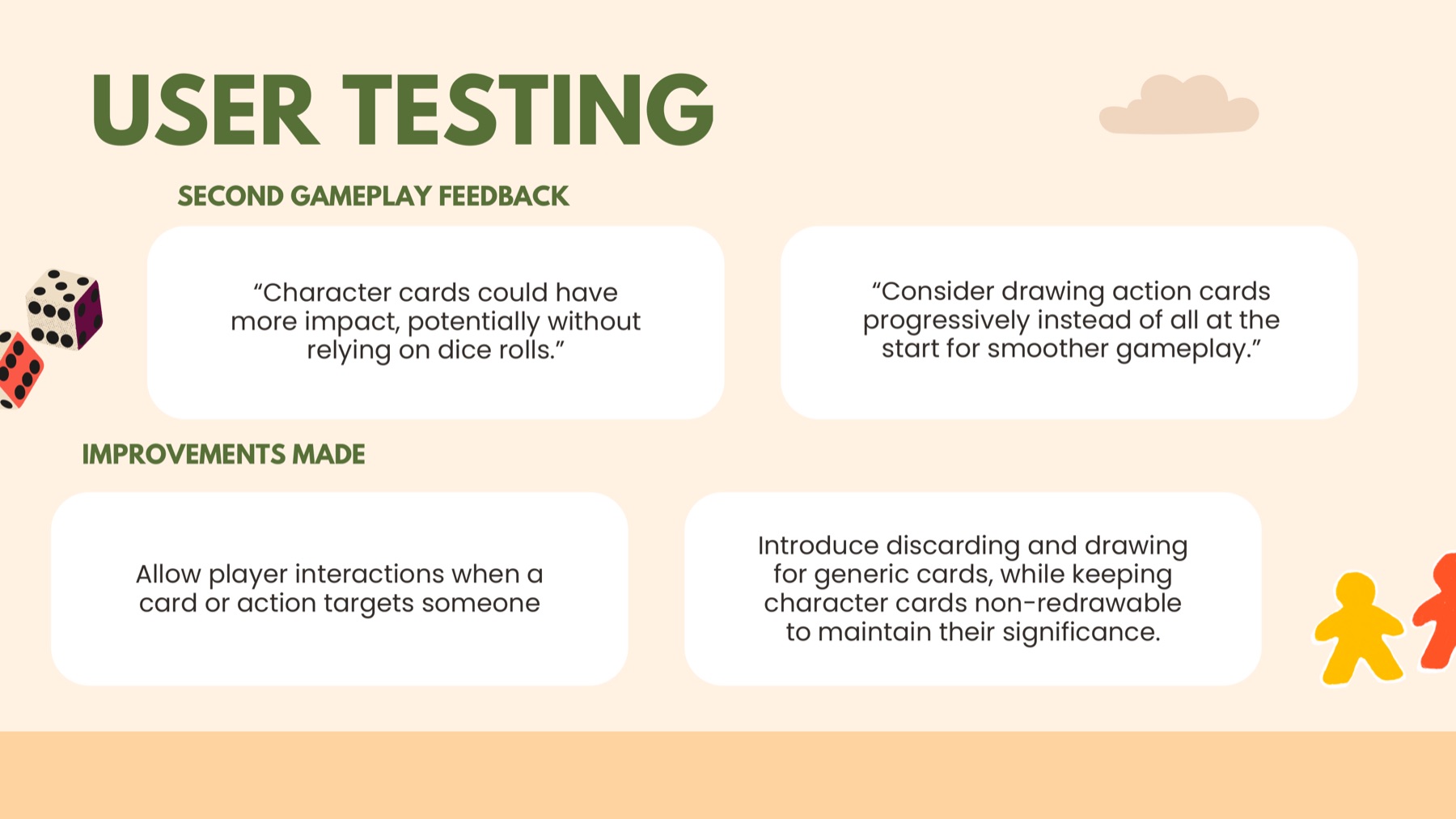
Second-round feedback
- Draw Action cards progressively rather than distributing all of them at the beginning.
- Allow generic cards to be discarded and redrawn.
- Keep character cards non-redrawable so roles remain meaningful.
- Support interactions when actions target another player.
- Give character cards greater influence rather than making them overly dependent on dice rolls.
The concept went through two rounds of gameplay testing, each followed by changes to the cards and rules. No participant counts, satisfaction scores or completion data are claimed here.
Final solution
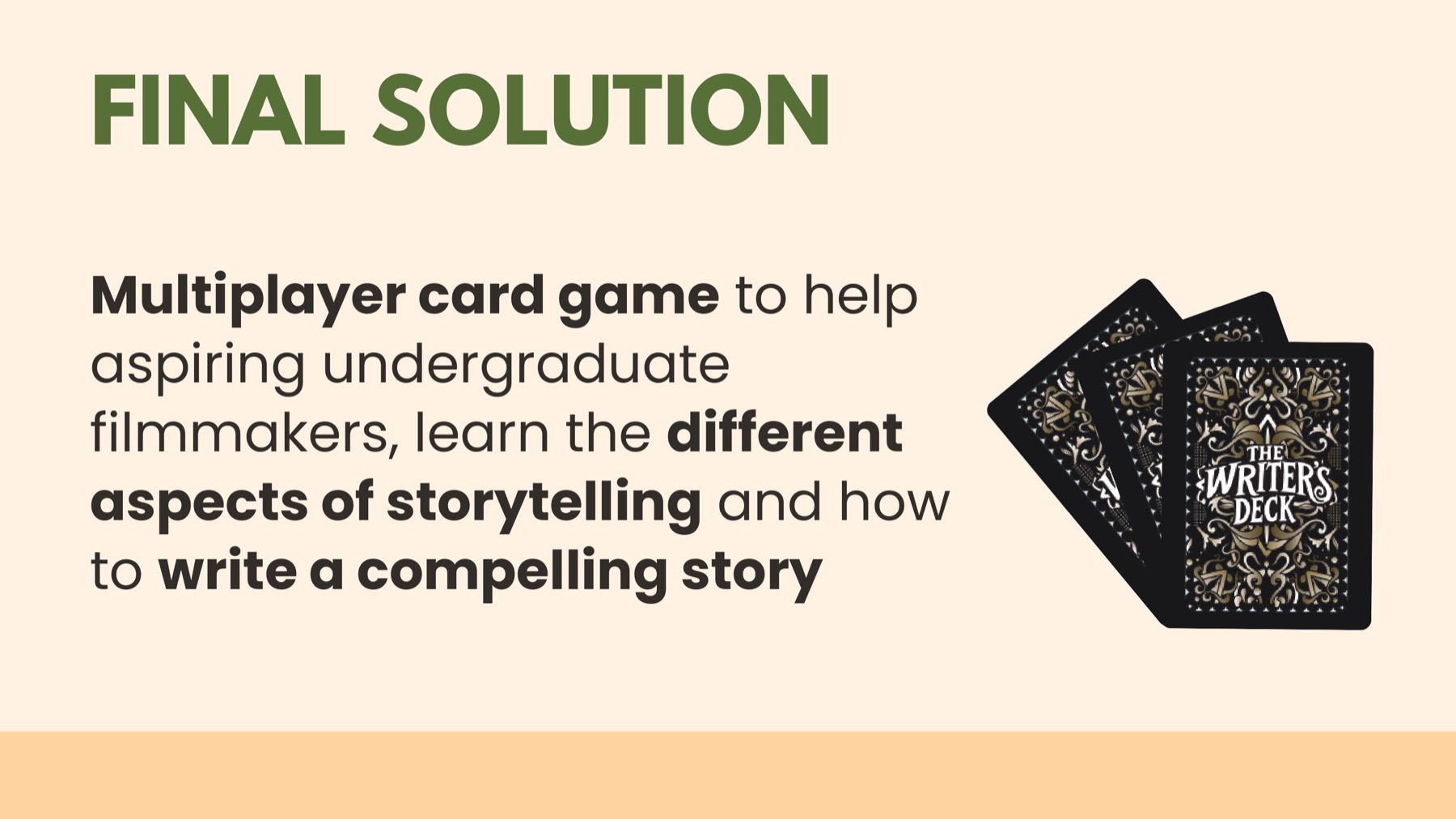
The final concept is a 3–6-player storytelling card game with one Game Master, two to five characters, multiple story plots, varied event and action cards and a guided post-game feedback session.
Intended learning value
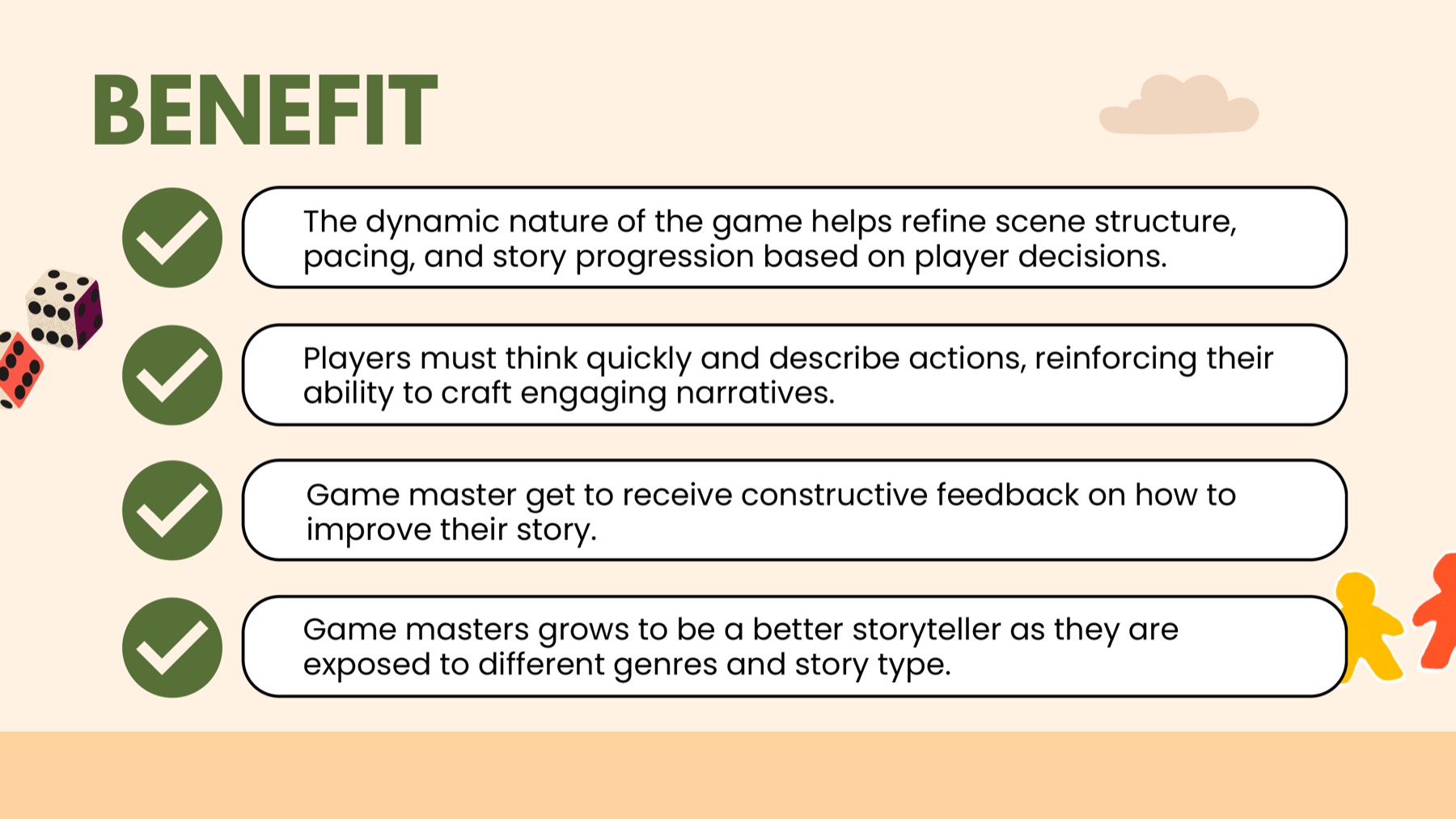
- Players practise thinking quickly and describing meaningful actions.
- Player choices expose the Game Master to alternative narrative directions.
- The evolving story helps participants examine scene structure, pacing and progression.
- The feedback session encourages reflection and peer learning.
- Repeated sessions expose players to different genres and story structures.
Outcomes and impact
The team developed and iterated a tangible product concept that translated an abstract educational challenge into an interactive social experience. The final design moved away from passive instruction and gave users a repeatable environment in which to practise narrative decisions.
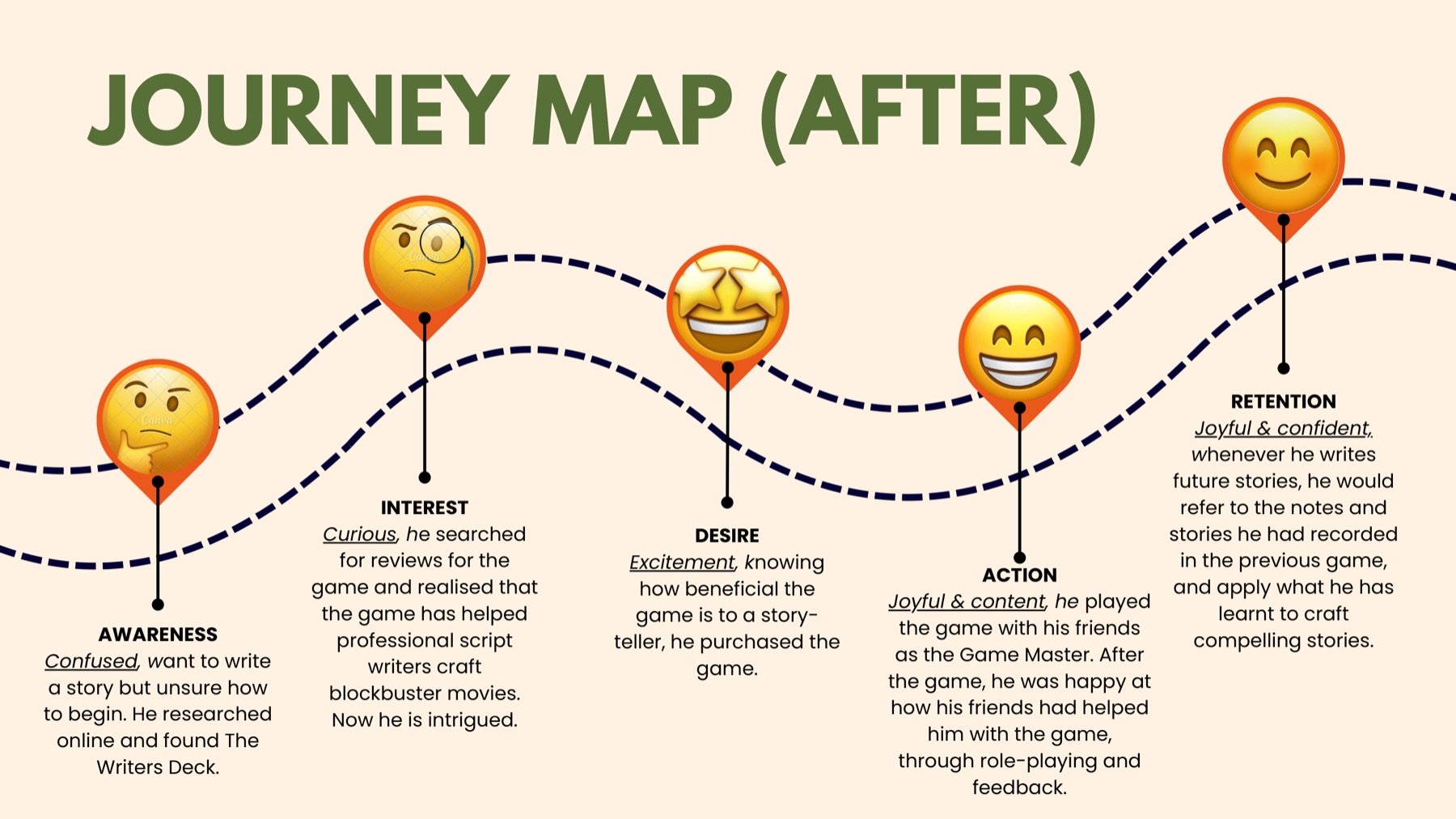
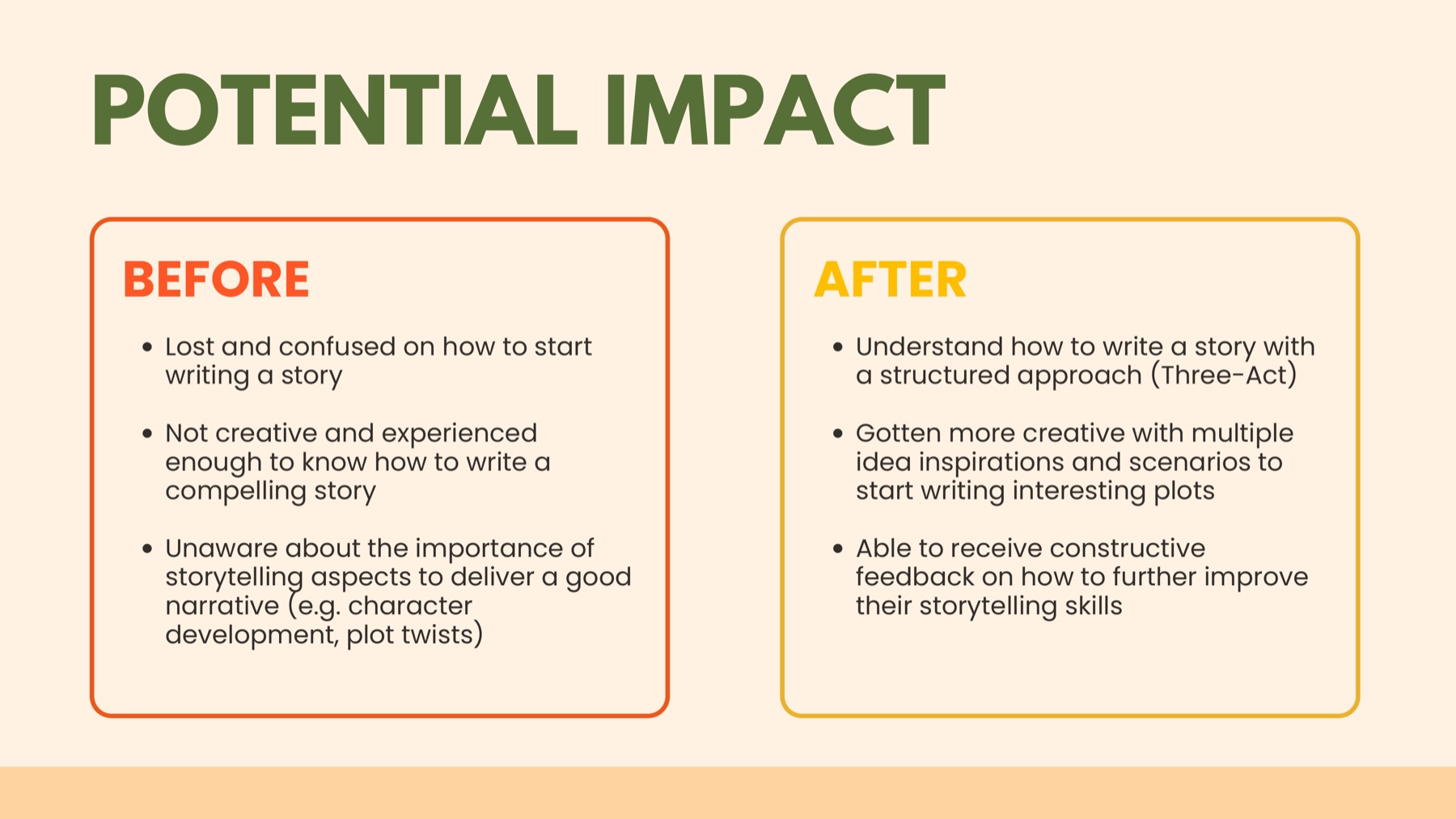
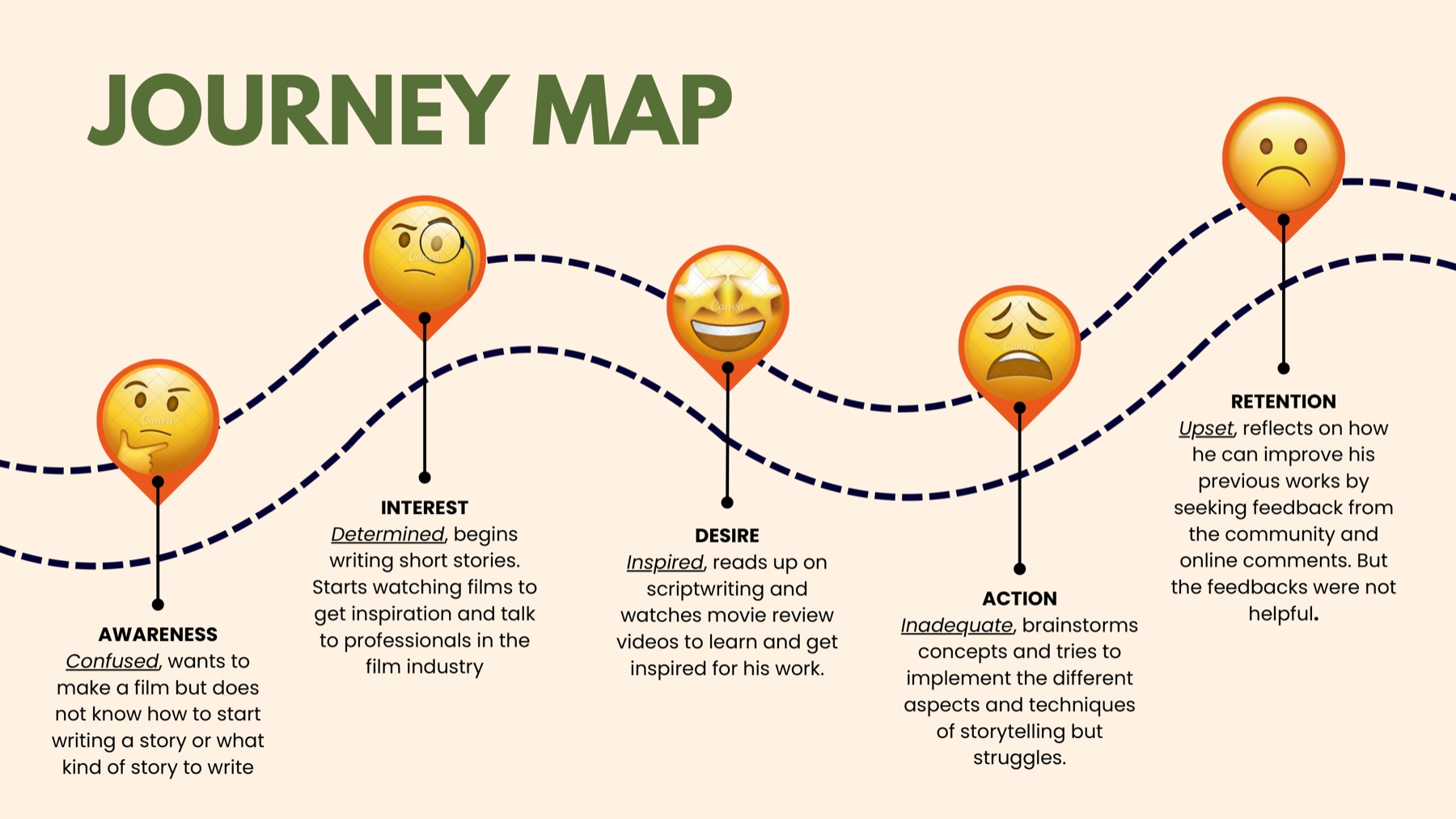
The journey map and impact comparison above are the team’s projections from the final presentation, not measured results. No commercial adoption or verified learning improvement is claimed.
Reflection
This project showed me that gamification works best when the mechanics reinforce the intended learning behaviour. Randomness alone did not teach storytelling; the value came from requiring players to make narrative choices, respond to changing conditions and discuss why a story did or did not work.
What I would do next
- Formalise and simplify the rulebook
- Test whether first-time players can begin without facilitator support
- Compare learning confidence before and after several sessions
- Balance card combinations across genres
- Explore a digital companion for saving stories and feedback
- Test replayability over multiple sessions