Project overview
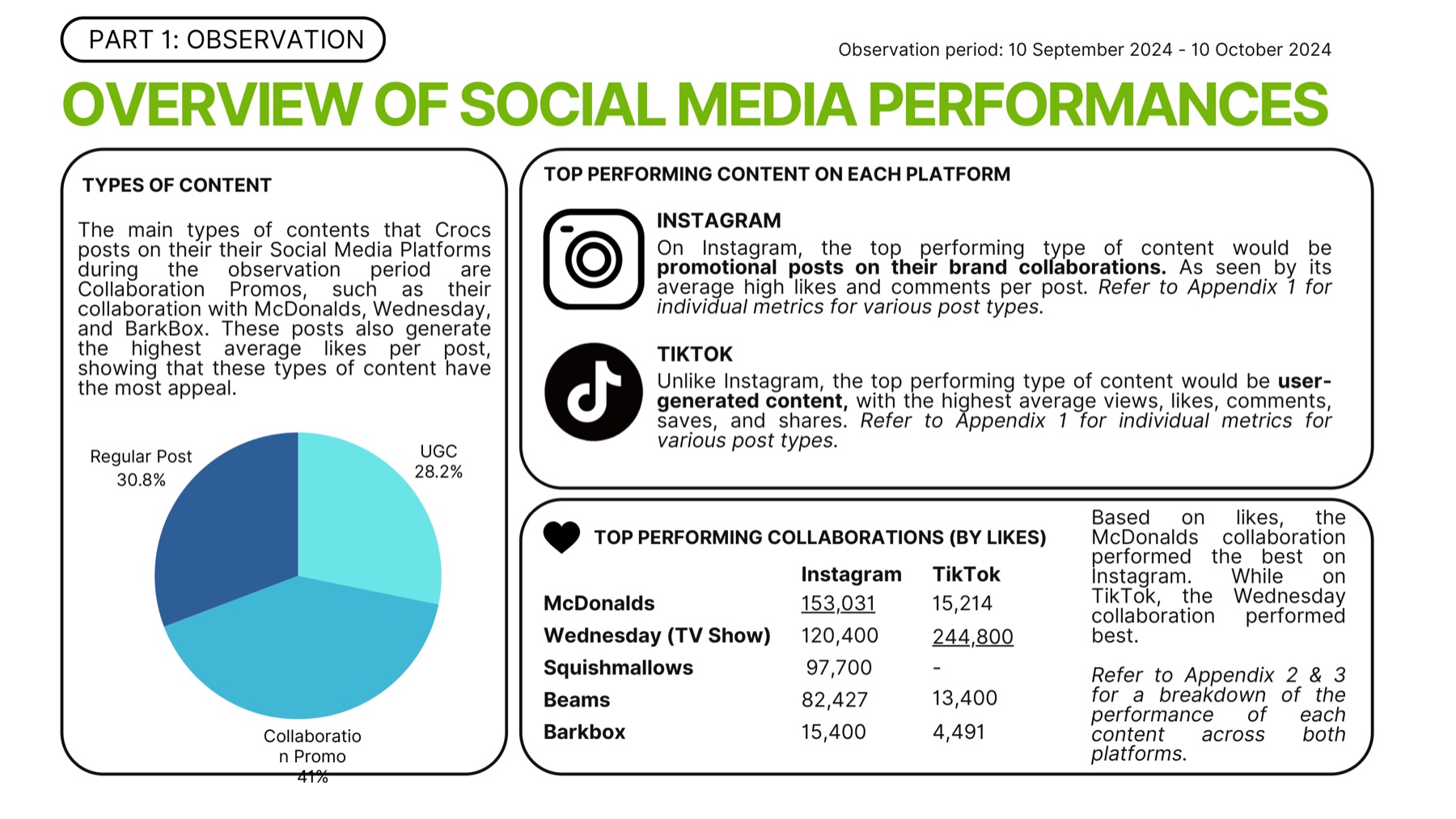
This project evaluated Crocs’ Instagram and TikTok activity during an observation period from 10 September to 10 October 2024.
What the analysis examined
- Audience fit
- Platform-specific content
- Community engagement
- Seasonal campaigns
- Brand collaborations
- User-generated content
- Strategic strengths and weaknesses
- Opportunities for future content strategy
- Channels
- Instagram and TikTok
- Observation period
- 10 September–10 October 2024
- Deliverables
- Channel analysis, SWOT, strategy evaluation and recommendations
- Focus audience
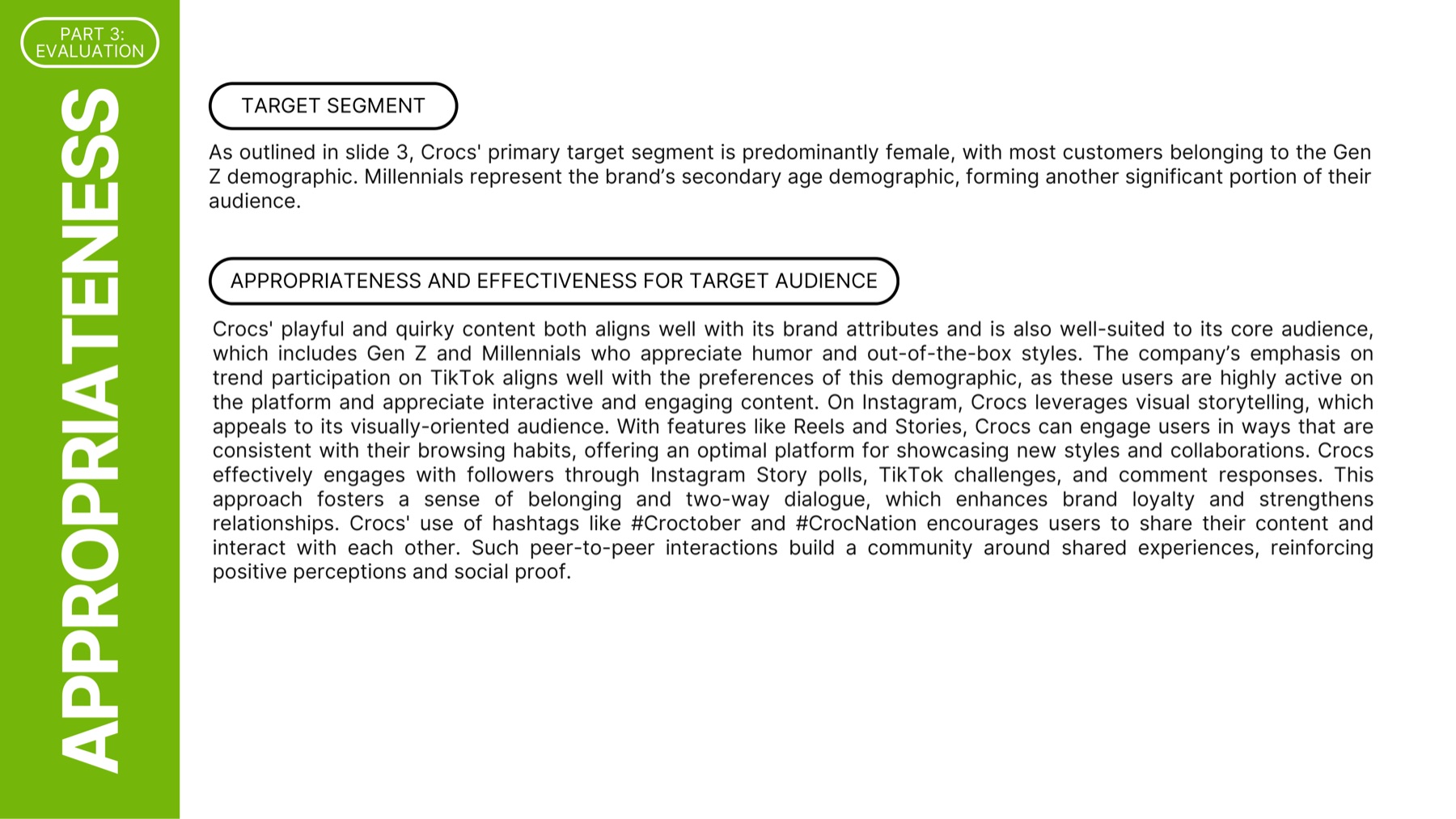
- Primarily Gen Z and Millennials
An independent evaluation carried out by me. Crocs did not commission, review or adopt this work.
How does a polarising product become a source of cultural participation?
Crocs’ recognisable design gives the brand strong visibility but also produces divided opinions. The strategic challenge was to understand how its social media approach turns product distinctiveness into community identity, trend participation and ongoing relevance.
Audience and platform context
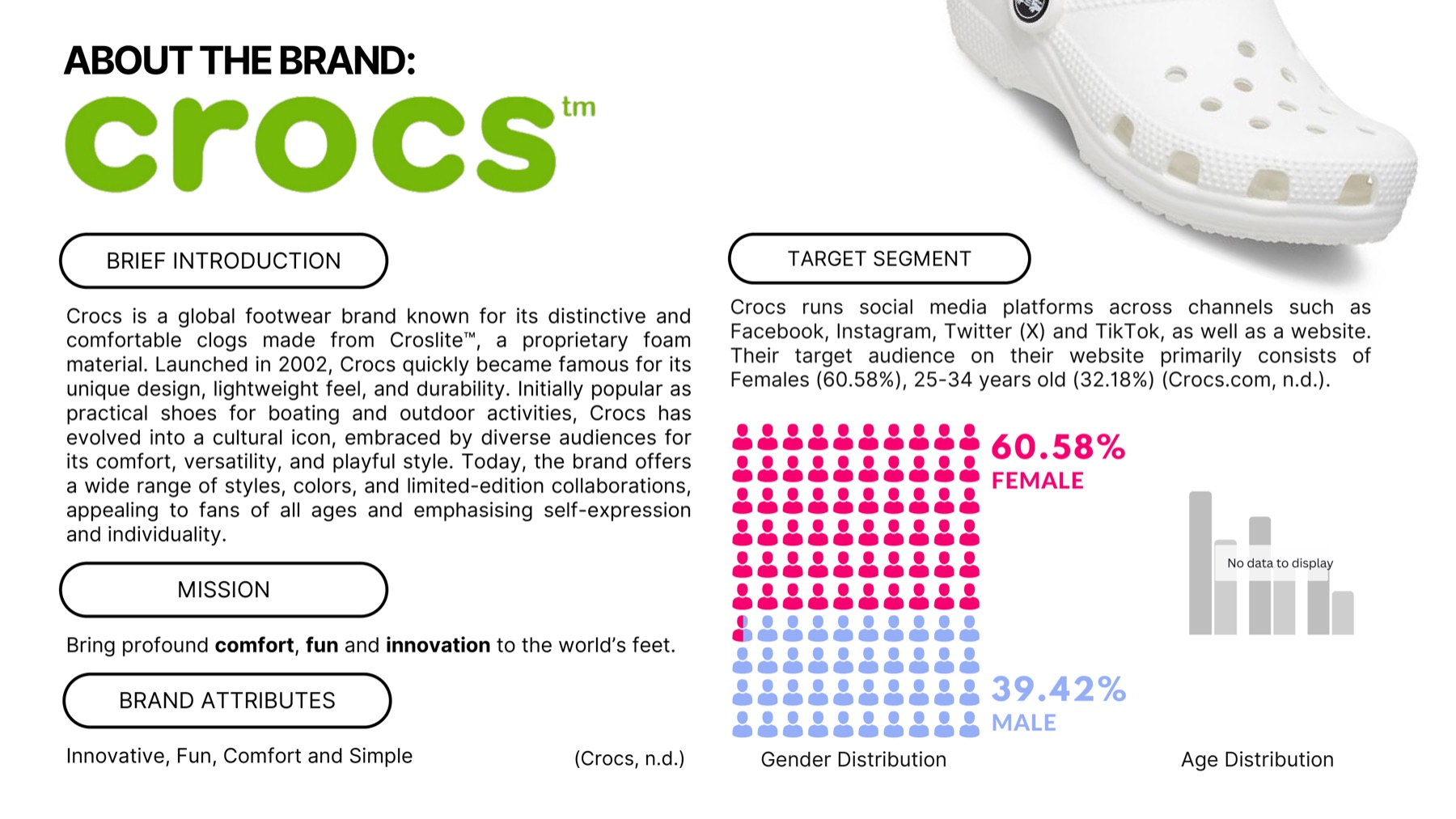
The observed audience was primarily younger and visually oriented, with women forming a significant part of the website audience. The two channels were not used interchangeably — each carried a different job.
Visual product presentation, collaborations, user-generated content, Stories and polls, and community interaction.
TikTok
Quirky and light-hearted content, trend participation, Gen-Z-oriented formats, community hashtags, and playlists for collaborations, new products and community content.
Observation and evidence
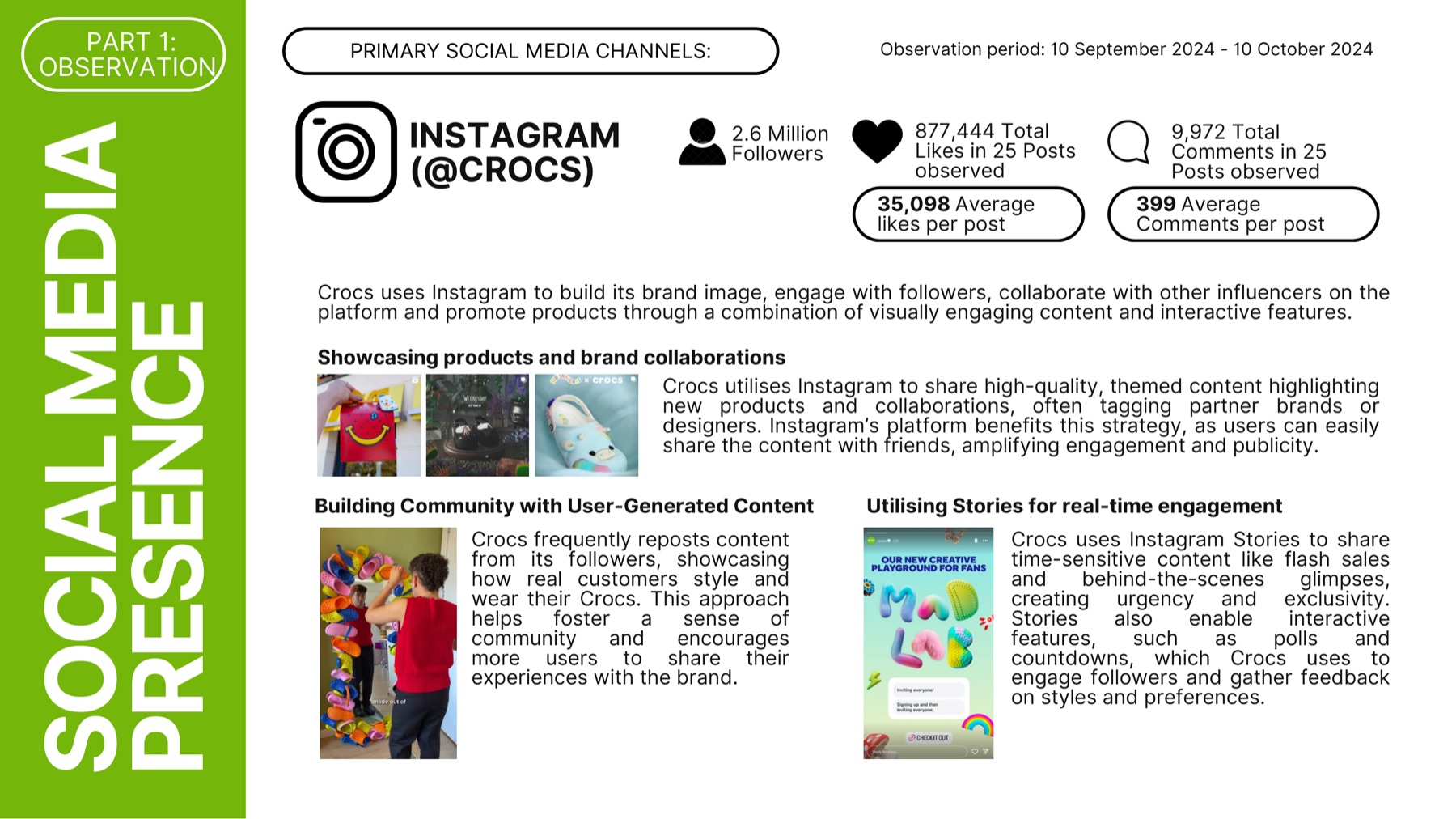
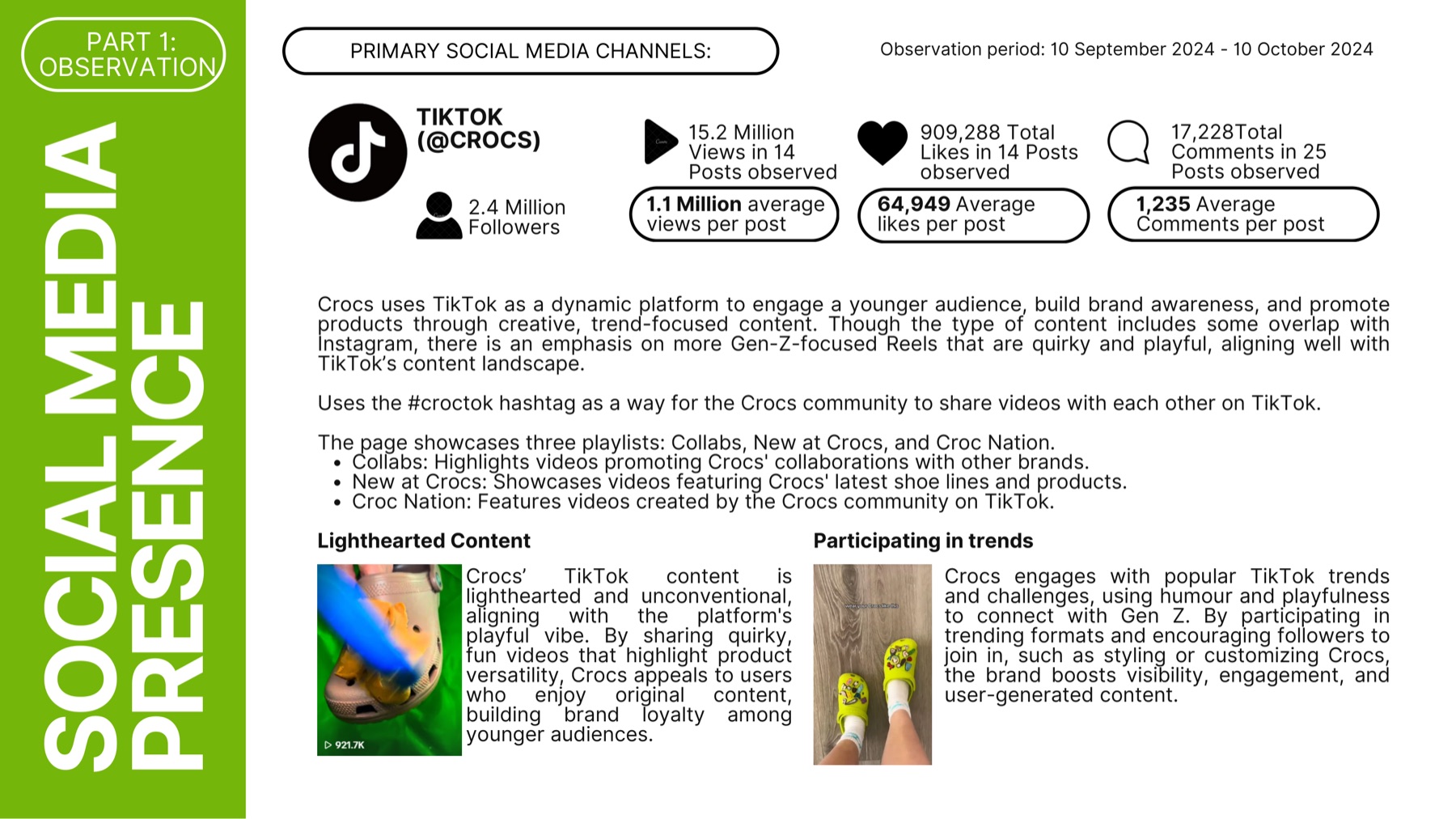
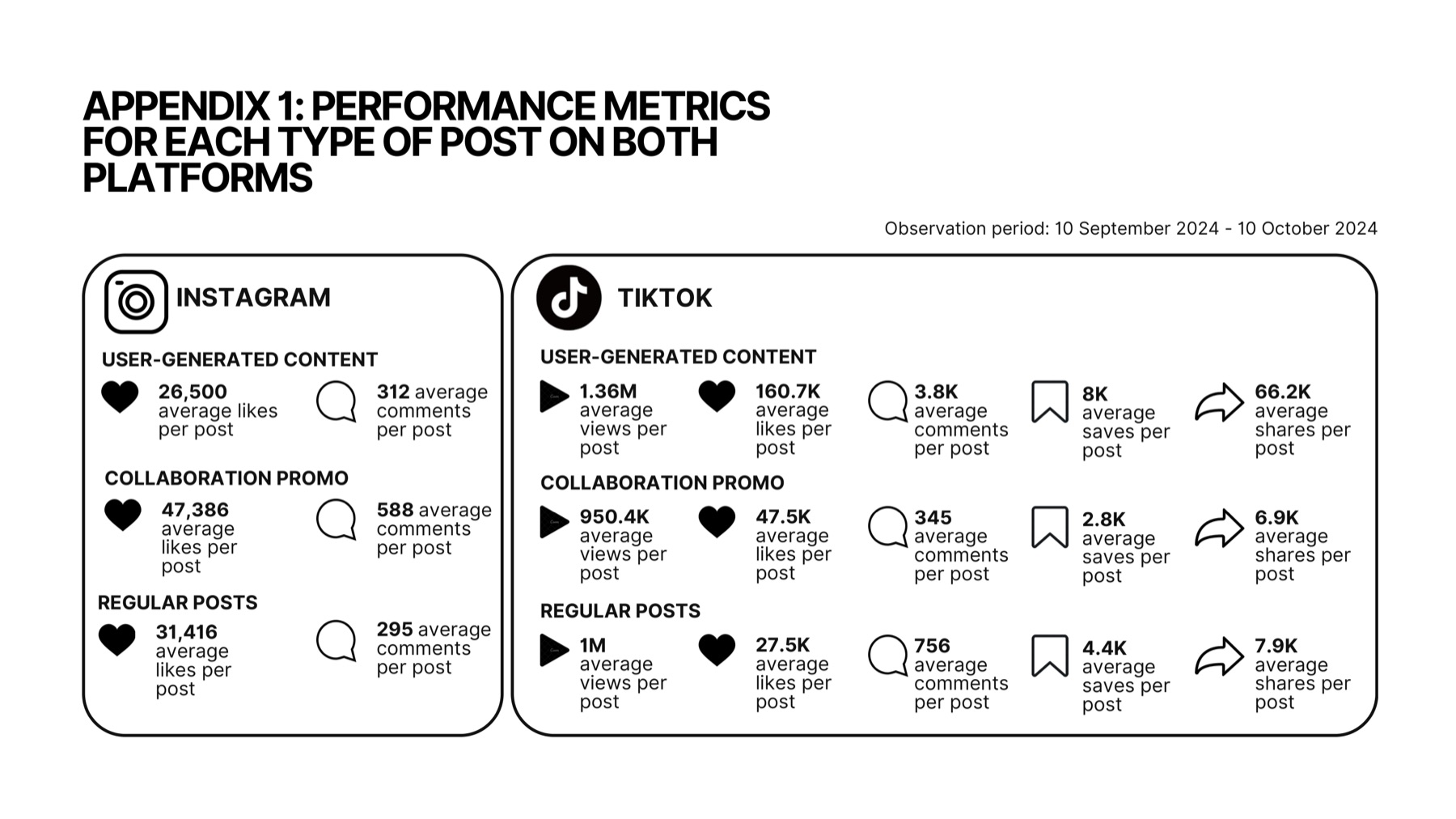
The figures below were recorded during the observation period of 10 September to 10 October 2024. They describe that window only and are not live metrics.
Instagram — observed
TikTok — observed
The source slide labels the comment total “25 posts observed”, though every other TikTok figure on it refers to 14. The average only reconciles against 14, so both figures are reported here against the 14 observed posts.
Content patterns
Community participation
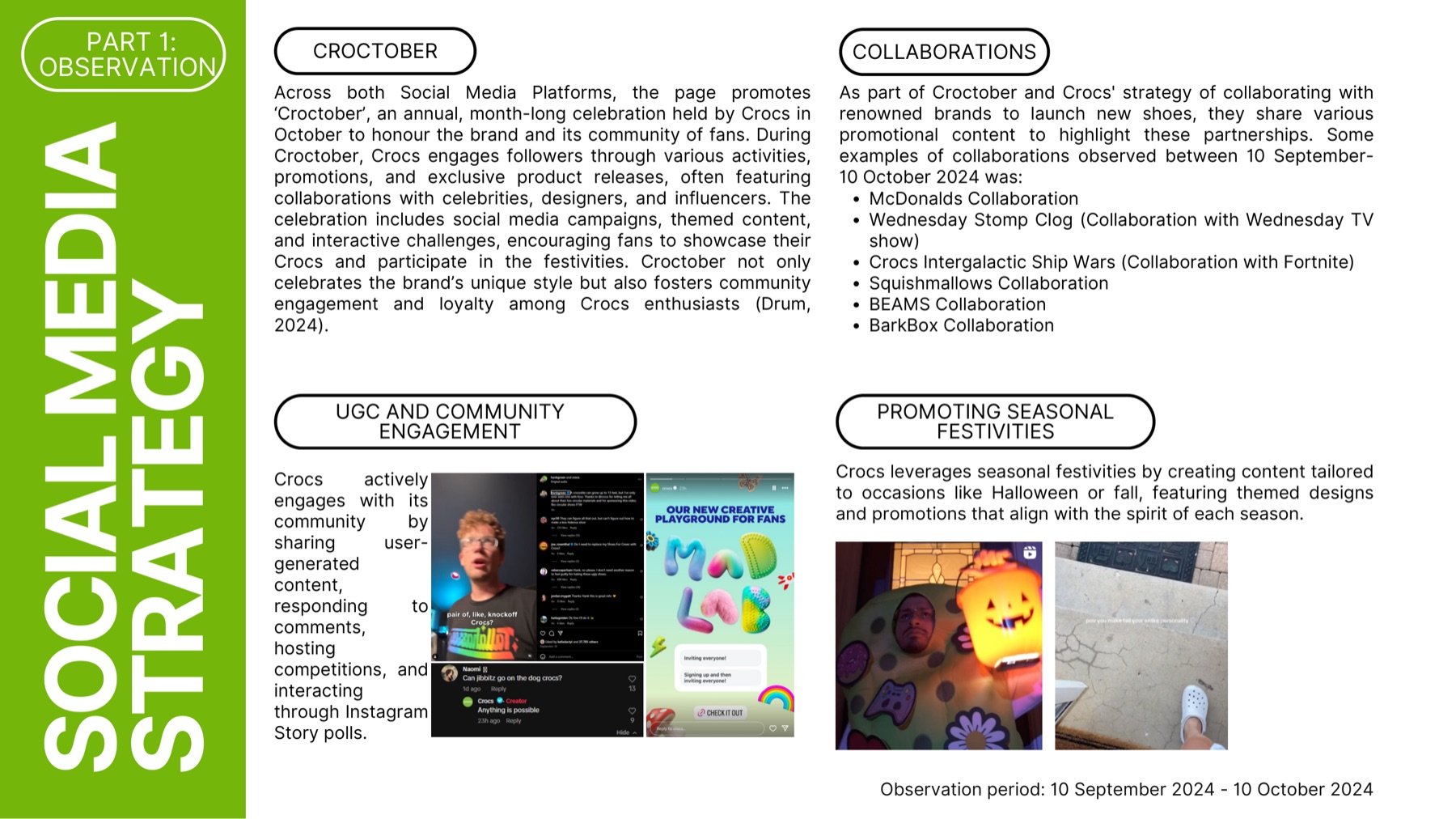
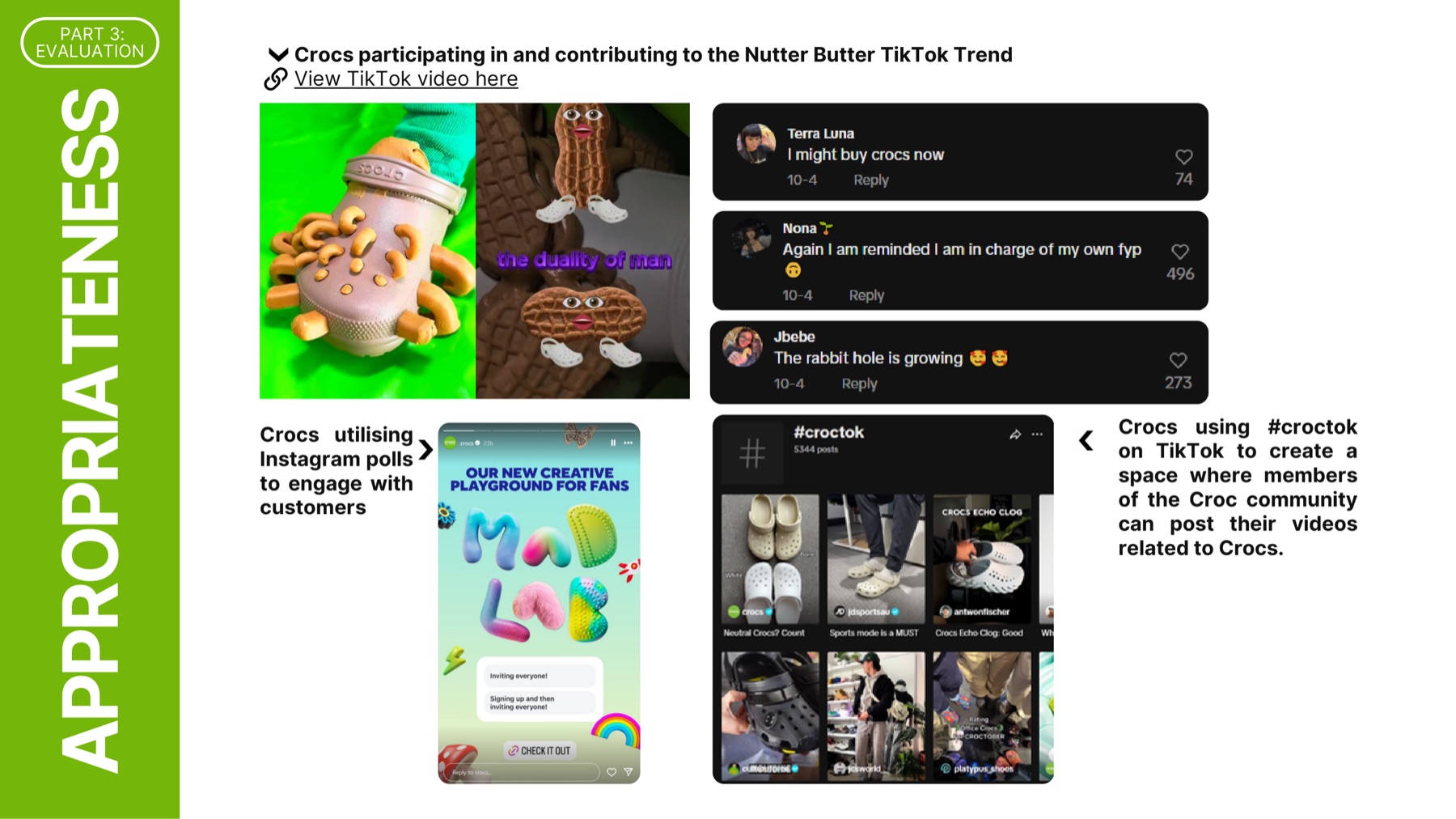
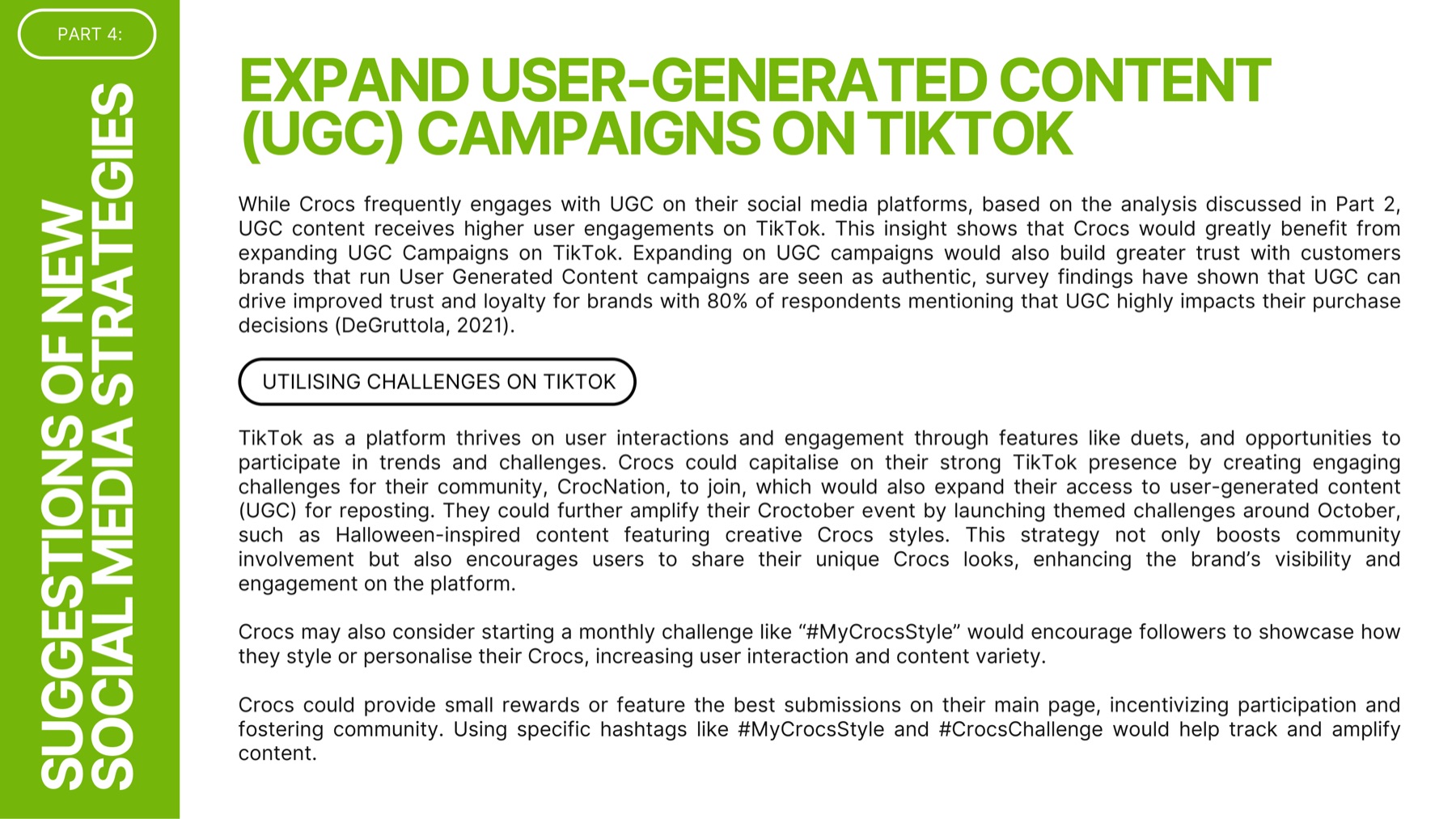
Crocs encouraged users to contribute through reposted customer content, comments, competitions, polls and community hashtags.
Cultural and seasonal relevance
Croctober and seasonal content gave the brand recurring moments around which to organise releases and participation.
Collaborations
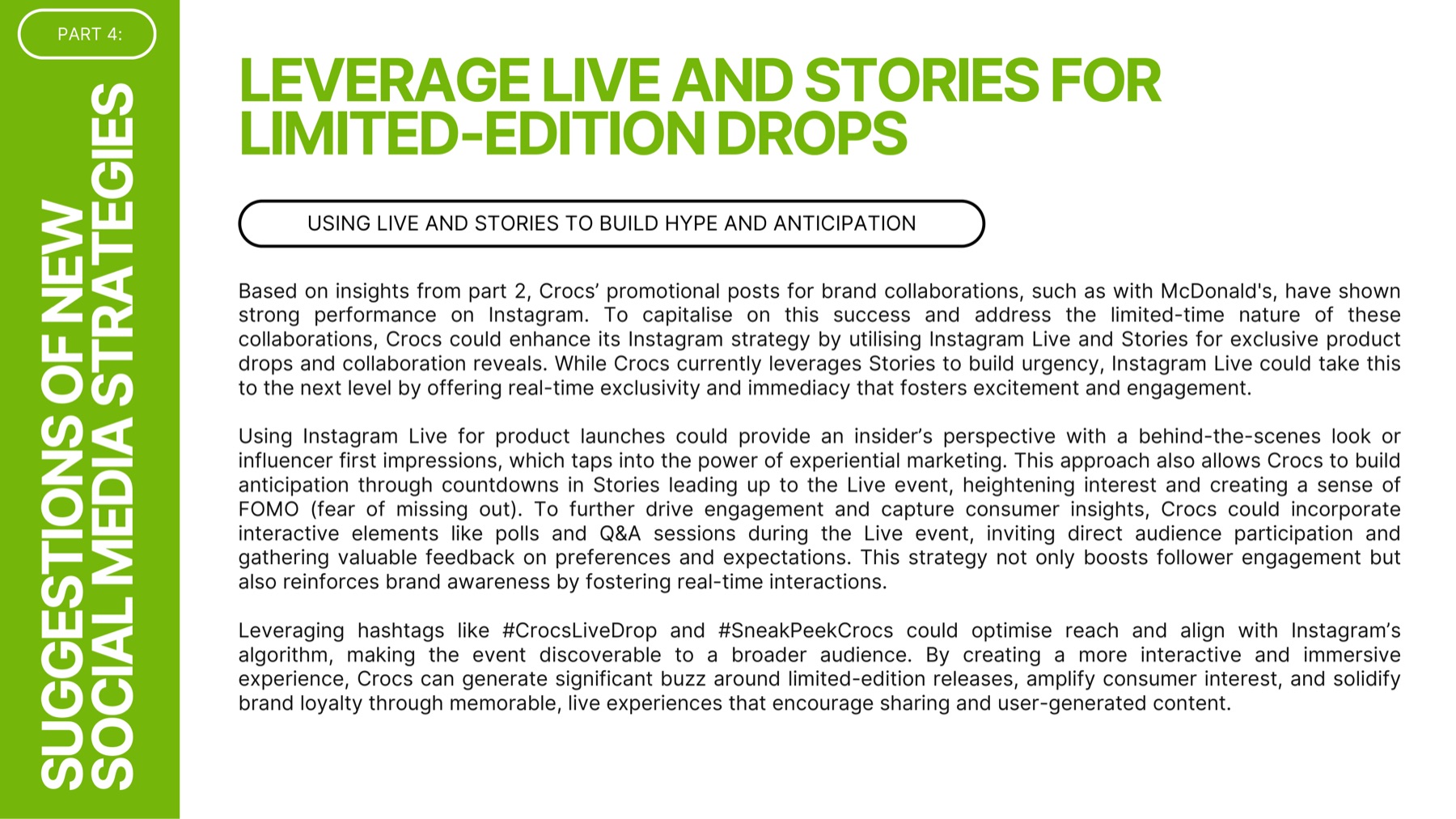
Partnerships with entertainment properties, designers, celebrities and brands helped Crocs access adjacent fan communities.
Platform-native expression
Visual storytelling supported Instagram, while humour, trends and unconventional content aligned with TikTok behaviour.
Strategic assessment
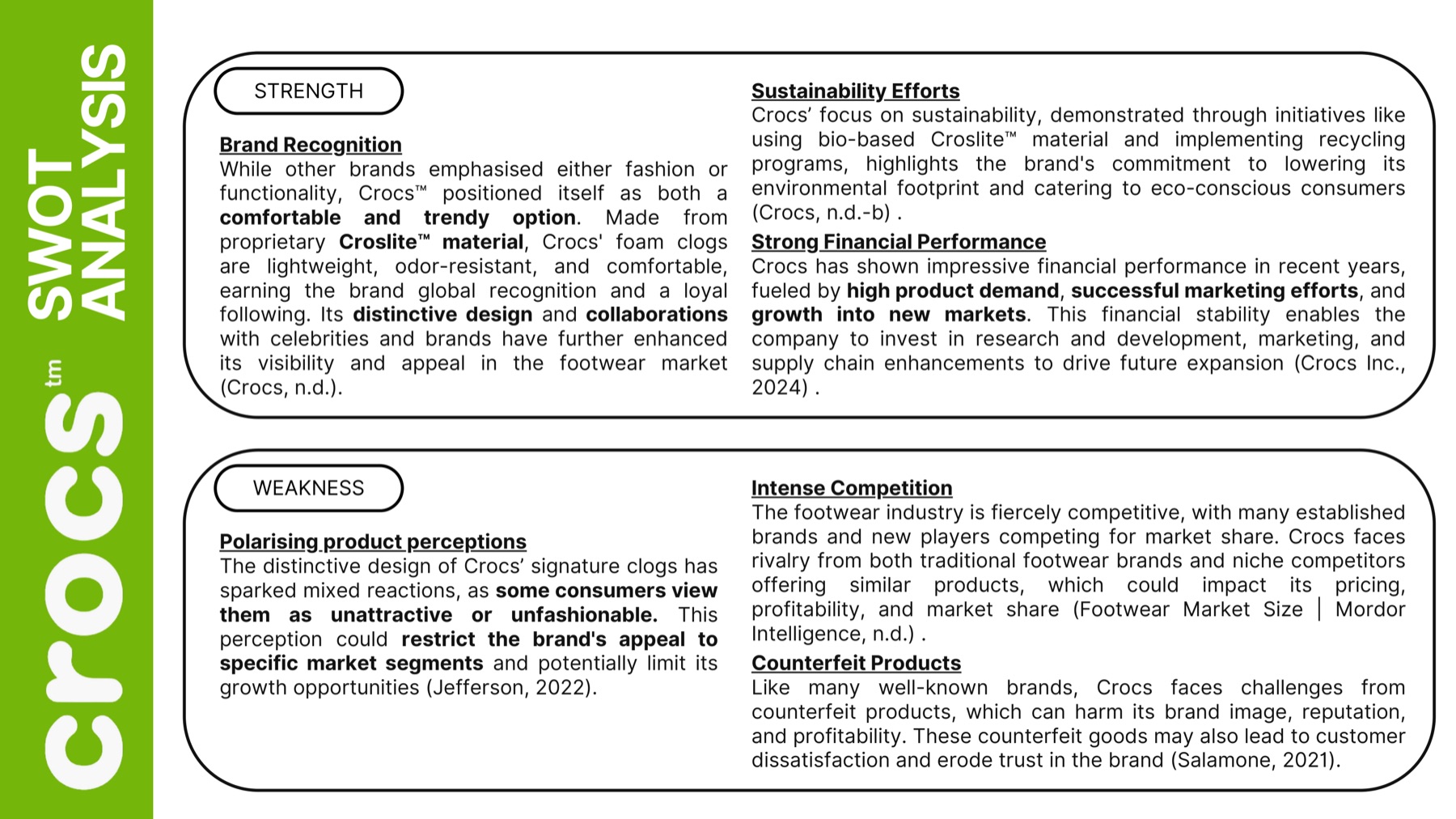
Strengths
- Strong and recognisable brand identity
- Content aligned with a playful and unconventional personality
- Effective use of visual and short-form platforms
- Community-building through user-generated content and interaction
- Collaborations that expand reach and cultural relevance
- Limited releases that generate urgency and discussion
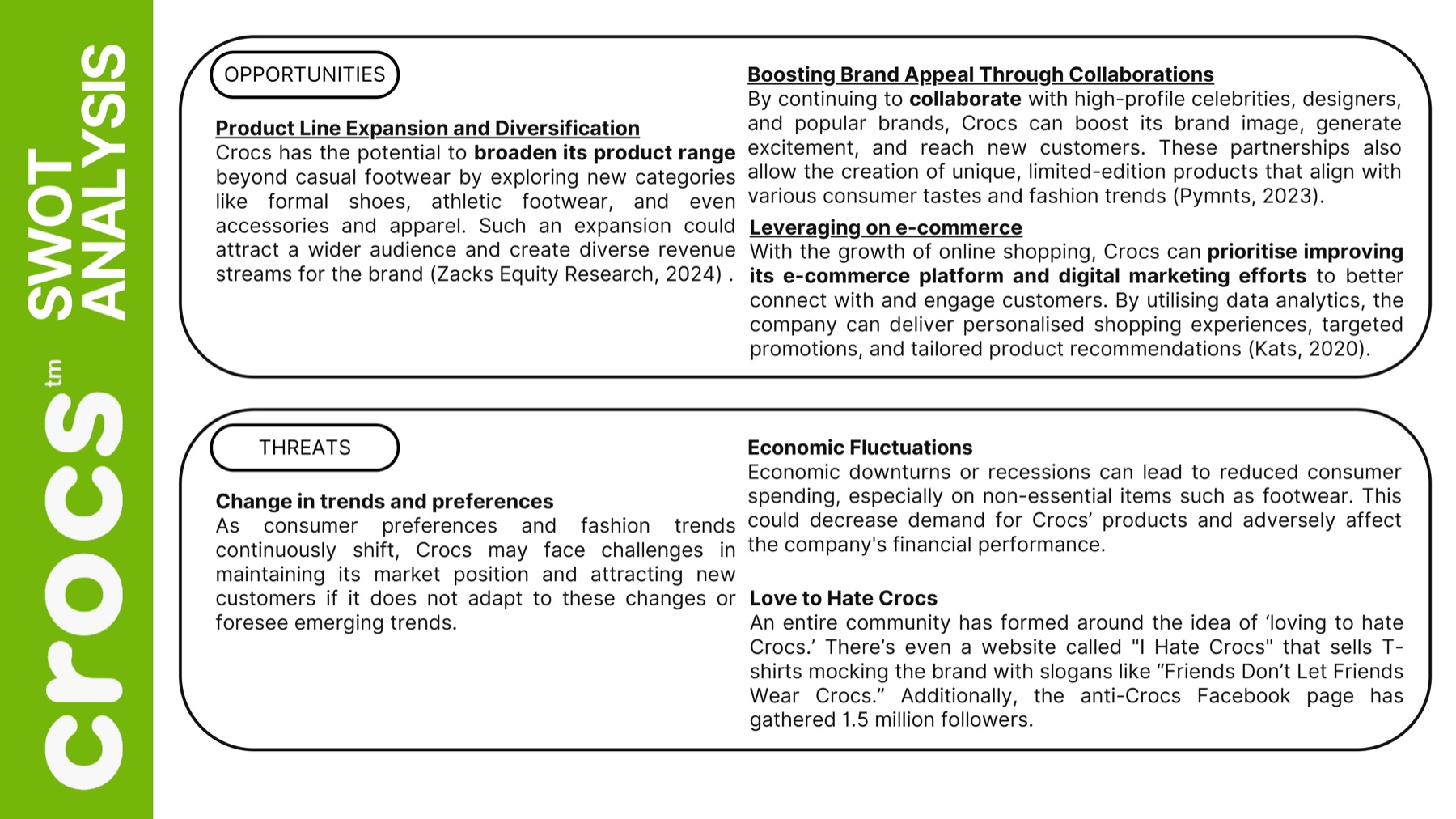
Risks and weaknesses
- The product remains visually polarising.
- Overdependence on collaborations could weaken the brand’s own stories.
- A poorly aligned partner could create reputational risk.
- Limited releases may frustrate customers when products sell out rapidly.
- Crisis responses may become reactive rather than proactive.
- Counterfeit products and intense footwear competition can weaken trust and differentiation.
Final recommendations
These are strategic recommendations derived from the analysis. They were not implemented by Crocs.
1. Build more customer-led narratives
Reduce dependence on high-profile partnerships by creating recurring formats centred on how customers personalise, wear and interpret Crocs.
2. Develop proactive community management
Prepare response principles for launches, stock shortages and controversial collaborations so customer concerns are addressed before they escalate.
3. Connect engagement to personalisation
Use poll responses, content interactions and audience behaviour to inform more relevant product discovery, recommendations and campaign messages.
4. Balance scarcity with trust
Preserve the excitement of limited releases while communicating availability, restocks and access rules more transparently.
5. Measure community health, not only reach
Track indicators such as contribution rate, repeat participation, sentiment, saves, shares and the percentage of engagement generated by customer-led content.
Outcomes and impact
The evaluation produced a structured view of how Crocs’ social presence combines brand identity, cultural participation and platform-native behaviour. It also identified strategic vulnerabilities that could emerge from collaboration dependence, customer frustration and reactive issue management.
Crocs did not commission, adopt or implement this work.
Reflection
This project reinforced that strong engagement is not automatically the same as a resilient strategy. Collaborations and trends can deliver visibility, but long-term brand value also depends on owned community behaviours, consistent trust and the ability to respond constructively when attention becomes negative.
What I would do next
- Extend the observation period
- Conduct formal sentiment analysis
- Compare performance by content category
- Separate organic and paid activity where data is available
- Benchmark against footwear and lifestyle competitors
- Develop an experiment plan for customer-led recurring content